Understanding Xanthorrhizol: The Main Active Ingredient of Temulawak
Author: apt. Shafina Putri Kamila, S.Farm. | Editor-in-Chief: Sandy Akbar Nusantara, S.T., M.B.A. | Published: September 03, 2026
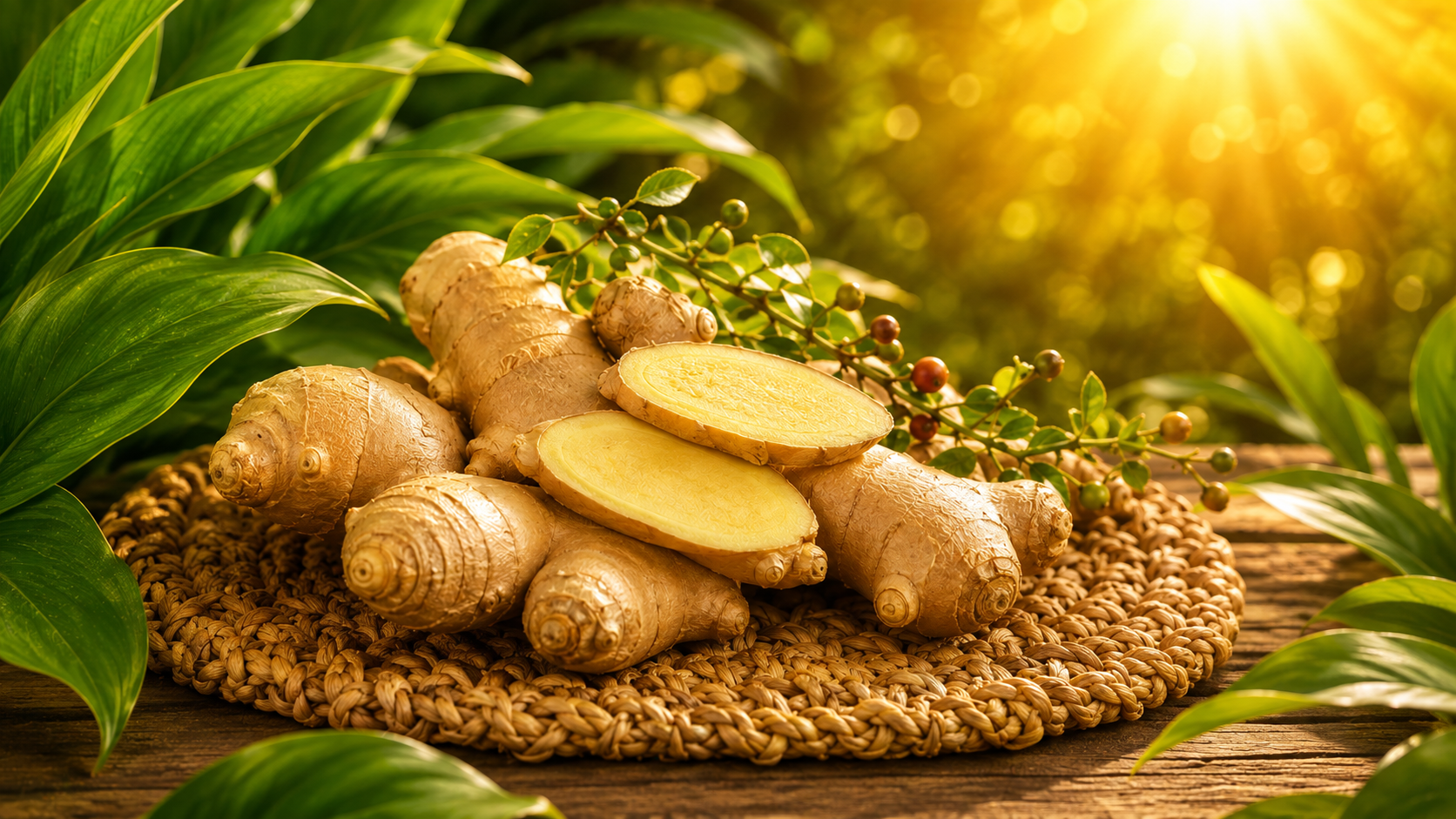
Who doesn't know temulawak? This herbal plant is very well-known in Indonesia and has been used for generations as a herbal medicine and a main ingredient in traditional herbal drinks. The effectiveness of temulawak in various herbal uses is certainly due to the various compounds contained within it. One of them is Xanthorrizhol.
Temulawak and Its Traditional Uses
Before delving deeper into the compound Xanthorrizhol, let’s first get to know the plant that is its main source, Temulawak (Curcuma xanthorrhiza).
Temulawak (Curcuma xanthorrhiza) or Java Turmeric is a plant that belongs to the Zingiberaceae and is a native plant of Indonesia that is currently also cultivated in various other Southeast Asian countries such as Malaysia, Thailand, Vietnam, and the Philippines. This plant can grow in tropical areas with elevations up to 2500 meters above sea level. The part that is most commonly used from this plant is its rhizome. The rhizome of temulawak is traditionally used to address various complaints including handling diarrhea, cough, asthma, alleviating pain in joints and bones, and increasing appetite.
In Indonesia itself, temulawak is known as one of the ingredients used in making herbal medicine. In its use as herbal medicine, a mixture of temulawak with several other herbal ingredients such as turmeric, brotowali, and sambiloto is used to achieve several health effects such as increasing stamina, improving the digestive system, and maintaining immunity.
Main Compound of Temulawak: Xanthorrhizol
Xanthorrhizol is a natural sesquiterpenoid compound that can be found in the extraction of essential oil from the rhizome of temulawak (Curcuma xanthorrhiza) and can comprise up to 51% of the total content of the essential oil. Xanthorrhizol can be isolated from the essential oil of temulawak using several methods such as soxhlet extraction and supercritical fluid carbon dioxide extraction. Xanthorrhizol that has been isolated has a colorless oil.
In addition to Curcuma xanthorrhiza, Xanthorrhizol can also be found in the rhizome of several other plants from the species Curcuma such as C. aromatica (white turmeric rhizome), C. longa (turmeric), C. aeruginosa (black ginger), and C. angustifolia5.
Activity and Pharmacological Benefits of Xanthorrhizol
It is not surprising that temulawak itself is already well known to have various health benefits, because various further studies related to those benefits both in vivo and in vitro have proven the truth and potential of those effects. More in-depth research related to temulawak shows that one of the compounds that plays a significant role in this is xanthorrhizol.
Based on various studies that have been conducted and its usage so far, xanthorrhizol is known to have quite a broad activity, including antioxidant, anti-inflammatory, antimicrobial, anticancer, and protective activity towards several important organs of the body5. Therefore, the development of research to further explore these activities continues to be conducted with the hope that we can find more ways to better utilize the potential of temulawak and xanthorrhizol.
Antimicrobial Potential of Xanthorrhizol
Xanthorrhizol is known to exhibit antimicrobial activity. Against gram-positive bacteria, this compound shows quite potent activity, but against gram-negative bacteria, the observed activity is weak5.
In a review conducted to assess the potential of Xanthorrhizol in preventing dental caries, this compound is known to show significant inhibitory effects against several bacteria that cause dental caries such as Streptococcus mutans, Streptococcus sanguinis, Enterococcus faecalis and Bacillus cereus. However, this compound cannot selectively target between harmful microbes on teeth and beneficial microbes in the mouth6.
Xanthorrhizol is also known to be effective and has rapid killing activity against methicillin-susceptible strains and methicillin-resistant strains of S. aureus at a therapeutic dose that indicates the potential for xanthorrhizol to be developed as an antibiotic against S. aureus. However, this still requires further evaluation and development7.
Anticancer Potential of Xanthorrhizol
Cancer remains one of the leading causes of death worldwide. Therefore, research to find various treatment alternatives and cancer management has become a widely explored topic. One of the compounds that has been the subject of research related to this is xanthorrhizol, which is already known for its anticancer potential. Both in vitro and in vivo studies of xanthorrhizol have confirmed the antiproliferative, antiangiogenic, antimetastatic, and apoptotic activities of this compound against several variations of cancer cells8.
Xanthorrhizol is known to significantly inhibit the formation of tumor nodules in lung tissue and the formation of intra-abdominal tumor masses. A test using a mouse model induced by colon cancer CT26 cells that can induce tumors in the lungs shows that the administration of xanthorrhizol successfully reduced the formation of tumor nodules by CT26 induction. Based on the data obtained from the study, the anti-metastatic mechanism of xanthorrhizol is suspected to be related to COX-2 expression and MMP-99 activity.
Another study that tested the activity of xanthorrhizol against cultured human colorectal cancer HCT 116 cells provided results indicating that low concentrations of xanthorrhizol (up to 50 micromoles) are effective in inhibiting cell proliferation with cytostatic activity, while higher concentrations (above 50 micromoles) show cytotoxic effects10.
In addition to being an anti-cancer compound, xanthorrhizol is also known to have potential as a chemoprotective agent against cisplatin-induced toxicity in the liver and kidneys where cisplatin is one of the commonly used drugs in cancer treatment that is currently very limited in use due to its toxicity. This protective effect is suspected to be related to the role of xanthorrhizol in inhibiting nuclear factor kappa B8.
There are still more published studies related to the potential of xanthorrhizol, however, it should be noted that these studies are still in the basic research stage. The application of xanthorrhizol as a standard medical drug in humans still requires further clinical trials and development.
Looking for high-quality Xanthorrhizol marker compounds for your research?
Get the products you need easily.
Click the purchase button below!

References:
1. Rahmat, E., Lee, J., & Kang, Y. (2021). Javanese Turmeric (Curcuma xanthorrhiza Roxb.): Ethnobotany, Phytochemistry, Biotechnology, and Pharmacological Activities. Evidence-based Complementary and Alternative Medicine, 2021, 1–15. https://doi.org/10.1155/2021/9960813
2. Kustina, E., Zulharmita, Misfadhila, S. (2020). Traditional uses, Phytochemistry and Pharmacology of Curcuma xanthorrhiza Roxb.: a review. International Journal of Science and Healthcare Research, 2020: 5(3).
3. Cheah, Y. H., Azimahtol, H. L. P., & Abdullah, N. R. (2007). Xanthorrhizol exhibits antiproliferative activity on MCF-7 breast cancer cells via apoptosis induction. PubMed, 26(6B), 4527–4534. https://pubmed.ncbi.nlm.nih.gov/17201174
4. Oon, S. F., Nallappan, M., Tee, T. T., Shohaimi, S., Kassim, N. K., Sa’ariwijaya, M. S. F., & Cheah, Y. H. (2015). Xanthorrhizol: a review of its pharmacological activities and anticancer properties. Cancer Cell International, 15(1), 100. https://doi.org/10.1186/s12935-015-0255-4
5. Simamora, A., Timotius, K. H., Setiawan, H., Yerer, M. B., Ningrum, R. A., & Mun’im, A. (2024b). Xanthorrhizol: Its bioactivities and health benefits. Journal of Applied Pharmaceutical Science. https://doi.org/10.7324/japs.2024.159484
6. Khalid, G. S., Hamrah, M. H., Ghafary, E. S., Hosseini, S., & Almasi, F. (2021). Antibacterial and antimicrobial effects of xanthorrhizol in the prevention of dental caries: a systematic review. Drug Design Development and Therapy, Volume 15, 1149–1156. https://doi.org/10.2147/dddt.s290021
7. Mordukhova, E. A., Kim, J., Jin, H., No, K. T., & Pan, J. (2024). The efficacy of the food-grade antimicrobial xanthorrhizol against Staphylococcus aureus is associated with McsL channel expression. Frontiers in Microbiology, 15, 1439009. https://doi.org/10.3389/fmicb.2024.1439009
8. Simamora, A., Timotius, K. H., Yerer, M. B., Setiawan, H., & Mun’im, A. (2022b). Xanthorrhizol, a potential anticancer agent, from Curcuma xanthorrhiza Roxb. Phytomedicine, 105, 154359. https://doi.org/10.1016/j.phymed.2022.154359
9. Choi, M., Kim, S. H., Chung, W., Hwang, J., & Park, K. (2004). Xanthorrhizol, a natural sesquiterpenoid from Curcuma xanthorrhiza, has an anti-metastatic potential in experimental mouse lung metastasis model. Biochemical and Biophysical Research Communications, 326(1), 210–217. https://doi.org/10.1016/j.bbrc.2004.11.020
10. Kang, Y., Park, K., Chung, W., Hwang, J., & Lee, S. K. (2009). Xanthorrhizol, a natural sesquiterpenoid, induces apoptosis and growth arrest in HCT116 human colon cancer cells. Journal of Pharmacological Sciences, 111(3), 276–284. https://doi.org/10.1254/jphs.09141fp
Editorial Team:
- Rafi Rif'atul Rizki, S.I.Kom.