Asiaticoside: The Compound Behind One of the Plants Miracle Elixir of Life
Author: apt. Shafina Putri Kamila, S.Farm. | Editor-in-Chief: Sandy Akbar Nusantara, S.T., M.B.A. | Published: August 20, 2026
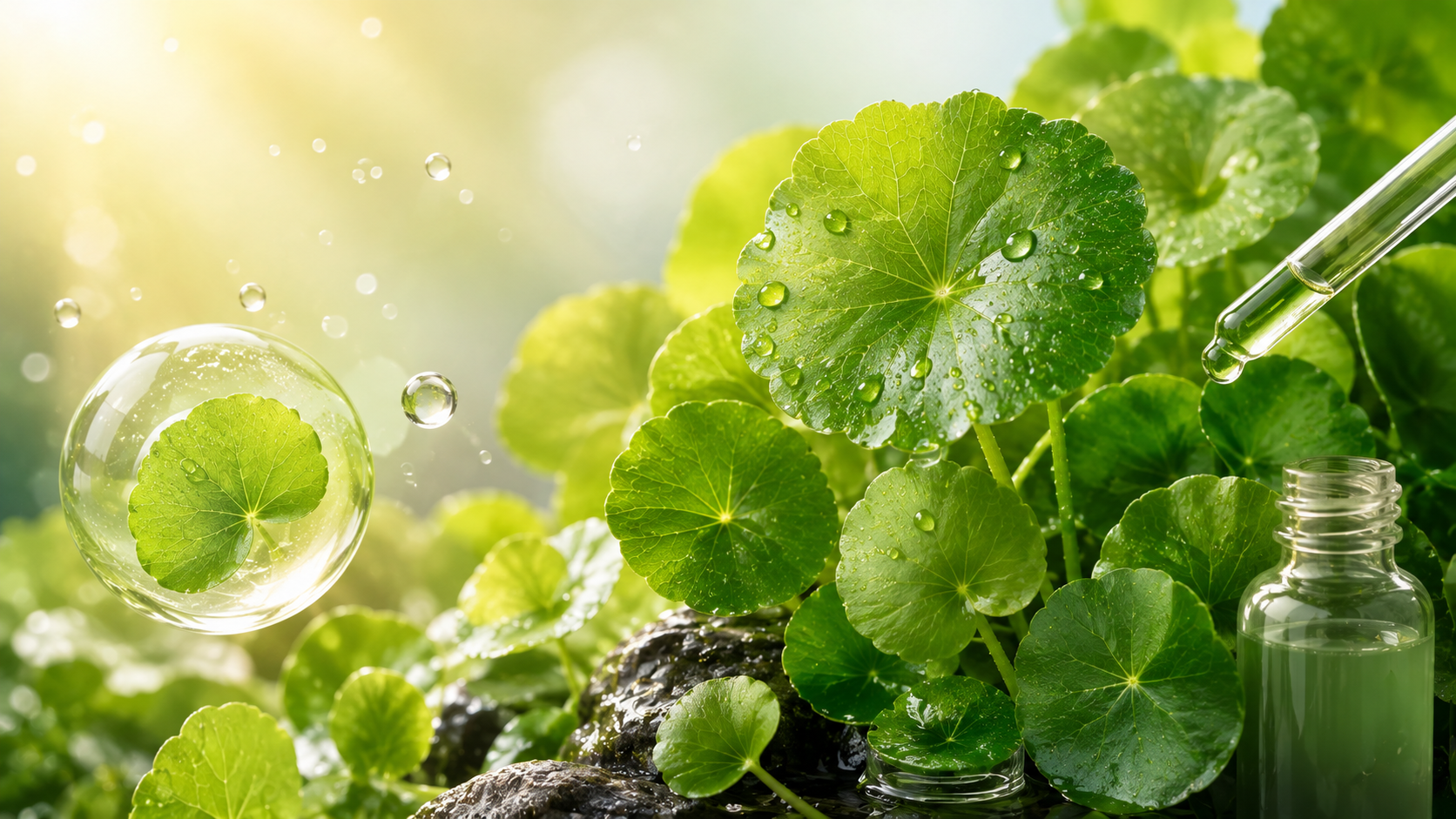
Recently, the pegagan plant (Centella asiatica) has been frequently heard, especially related to its use as an herbal ingredient in various cosmetic or skin care products due to its many benefits for the skin. However, did you know there is a compound that plays the most important role in providing those effects? The compound is a metabolite called Asiaticoside. Let's discuss further about Centella asiatica and this Asiaticoside compound.
Centella Asiatica, A Small Leaf Rich in Benefits
Centella asiatica is also known as pegagan leaf, gotu kola, asiatic pennywort, and spadeleaf and is a plant that belongs to the family Apiaceae1. This plant can be found growing in moist places such as swamps in countries with tropical or subtropical climates, including India, Pakistan, Sri Lanka, Oceania, Africa, China, and Southeast Asia1,2. Centella asiatica has long been widely used as a herbal medicine. The use of this plant as herbal medicine is widespread from India, where it is commonly referred to as mandukparni or jalbrahmi, in China where it is known as Jixuecao, to various islands in Indonesia2.
This plant is traditionally used to address various complaints including inflammation, skin conditions, rheumatism, epilepsy, and several neurological disorders. In India, this plant is also used to address complaints such as body pain, headaches, eczema, and mental disorders. Its very wide usage has led to the plant being referred to as one of the “Miracle elixirs of life” more than 2000 years ago1.
Asiaticoside, An Important Compound from Centella Leaves
Asiaticoside is one of the compounds known to play an important role in the pharmacological activity of Centella asiatica. In addition to asiaticoside, other compounds that have similar activity are madecassoside and the aglycone derivatives of both, namely asiatic acid and madecassic acid. These compounds are triterpenoid saponins that serve as secondary metabolites of the plant in question3.
Asiaticoside is a triterpenoid saponin compound4. Based on several pharmacokinetic observations, asiaticoside is known to be distributed to various organs including the liver, kidneys, heart, lungs, stomach, skin, and brain, and can cross blood brain barrier without causing harmful side effects. However, asiaticoside is known to have low solubility in water, resulting in very low absolute bioavailability5.
Pharmacological Benefits of Asiaticoside
There have been many studies and tests exploring the various pharmacological benefits of asiaticoside, which are very extensive. Essentially, asiaticoside has anti-inflammatory, antioxidant, antipyretic, and anti-tumor effects3. Based on this information, various studies have been conducted to further explore the potential of asiaticoside as a treatment for various specific conditions. Among these are as follows:
1. Wound Healing
One of the well-known benefits of asiaticoside is its role in wound healing or wound healing. Before many tests were conducted regarding the wound healing activity of asiaticoside, the plant Centella asiatica had been traditionally used to address wounds. This has become a reference for various researchers to begin studying the activity of wound healing from asiaticoside.
Asiaticoside has been found to promote the process of angiogenesis, playing an important role in the wound healing process both in in vitro and in vivo models6. In tests to observe the activity of asiaticoside in diabetic wound healing, several effects found from the administration of asiaticoside include increased collagen synthesis, reduced inflammation, promoted angiogenesis, and stimulated proliferation and migration of cells, all of which play a role in enhancing wound healing in patients with diabetes7.
2. Neuroprotective Effects for Degenerative Diseases
Due to its ability to cross the blood brain barrier, asiaticoside has the potential to be used as a neuroprotective agent5.
Asiaticoside has antipyretic, anti-inflammatory, and antioxidant activities. In the CNS (Central Nervous System), asiaticoside can alleviate neurobehavioral, neurochemical, and histological changes in rats subjected to the procedure transient focal middle cerebral artery occlusion (tMCAO). In research focused on examining the neuroprotective mechanisms of asiaticoside, it was hypothesized that asiaticoside protects neurons from excitotoxicity by inhibiting cell apoptosis and calcium overload8.
In another study conducted to test the potential of asiaticoside as a treatment for Parkinson’s disease due to its neuroprotective and anti-inflammatory effects, the in vivo providing results that show asiaticoside can reduce the loss of dopaminergic neurons and alleviate motor dysfunction in induced rats Parkinson’s disease with MPTP9.
3. Effects On Anxiety and Depression
The anti-inflammatory role of asiaticoside is also suspected to provide significant effects on inflammation-induced depression in neurons. Depression-associated neuroinflammation can activate pro-inflammatory cytokines that can affect the synthesis and metabolism of serotonin. Administration of asiaticoside in rats with chronic unpredictable mild stress shows that asiaticoside can reduce depressive-like behavioral patterns in those rats10.
4. Role Organ Protective Others
The anti-inflammatory and antioxidant roles of asiaticoside also link asiaticoside with protective effects on various other organs, including hepatoprotective, pulmonary-protective, and nephroprotective10.
Looking for high-quality Asiaticoside marker compounds for your research?
Get the products you need easily.
Click the purchase button below!

References
1. Prakash, V., Jaiswal, N., & Srivastava, M. (2017). A REVIEW ON MEDICINAL PROPERTIES OF CENTELLA ASIATICA. Asian Journal of Pharmaceutical and Clinical Research, 10(10), 69. https://doi.org/10.22159/ajpcr.2017.v10i10.20760
2. Gohil, K., Patel, J., & Gajjar, A. (2010). Pharmacological review on Centella asiatica: A potential herbal cure-all. Indian Journal of Pharmaceutical Sciences, 72(5), 546. https://doi.org/10.4103/0250-474x.78519
3. Bandopadhyay, S., Mandal, S., Ghorai, M., Jha, N. K., Kumar, M., Radha, Ghosh, A., Proćków, J., De La Lastra, J. M. P., & Dey, A. (2023). Therapeutic properties and pharmacological activities of asiaticoside and madecassoside: A review. Journal of Cellular and Molecular Medicine, 27(5), 593–608. https://doi.org/10.1111/jcmm.17635
4. Patel, K., Mishra, R., Patel, D. K. (2016). A review on phytopharmaceutical importance of asiaticoside. Journal of Coastal Life Medicine, 4(12), 1000–1007. https://doi.org/10.12980/jclm.4.2016j6-161
5. He, Z., Hu, Y., Niu, Z., Zhong, K., Liu, T., Yang, M., Ji, L., & Hu, W. (2022). A review of pharmacokinetic and pharmacological properties of asiaticoside, a major active constituent of Centella asiatica (L.) Urb. Journal of Ethnopharmacology, 302(Pt A), 115865. https://doi.org/10.1016/j.jep.2022.115865
6. Shukla, A., Rasik, A., Jain, G., Shankar, R., Kulshrestha, D., & Dhawan, B. (1999). In vitro and in vivo wound healing activity of asiaticoside isolated from Centella asiatica. Journal of Ethnopharmacology, 65(1), 1–11. https://doi.org/10.1016/s0378-8741(98)00141-x
7. Razif, R., Fadilah, N. I. M., Ahmad, H., Hao, D. L. Q., Maarof, M., & Fauzi, M. B. (2025). Asiaticoside-Loaded multifunctional bioscaffolds for enhanced hyperglycemic wound healing. Biomedicines, 13(2), 277. https://doi.org/10.3390/biomedicines13020277
8. Liu, S., An, J., Qi, F., Yang, L., Tian, Z., & Zhao, M. (2014). Neuroprotective effects of Asiaticoside. Neural Regeneration Research, 9(13), 1275. https://doi.org/10.4103/1673-5374.137574
9. He, Z., Hu, Y., Hu, Y., Zhang, Y., Xie, J., Niu, Z., Yang, G., Zhang, J., Zhao, Z., Wei, S., Wu, H., & Hu, W. (2024). Asiaticoside exerts neuroprotection through targeting NLRP3 inflammasome activation. Phytomedicine, 127, 155494. https://doi.org/10.1016/j.phymed.2024.155494
10. Bandopadhyay, S., Mandal, S., Ghorai, M., Jha, N. K., Kumar, M., Radha, Ghosh, A., Proćków, J., De La Lastra, J. M. P., & Dey, A. (2023c). Therapeutic properties and pharmacological activities of asiaticoside and madecassoside: A review. Journal of Cellular and Molecular Medicine, 27(5), 593–608. https://doi.org/10.1111/jcmm.17635
Editorial Team:
- Rafi Rif'atul Rizki, S.I.Kom.