THE SYNERGY EFFECT: WHY TAMANU POLYPHENOL OUTPERFORMS VIRGIN OIL
Author: Adrian S. Siregar, Ph.D. | Editor-in-Chief: Sandy Akbar Nusantara, S.T., M.B.A. | Published: July 16, 2026
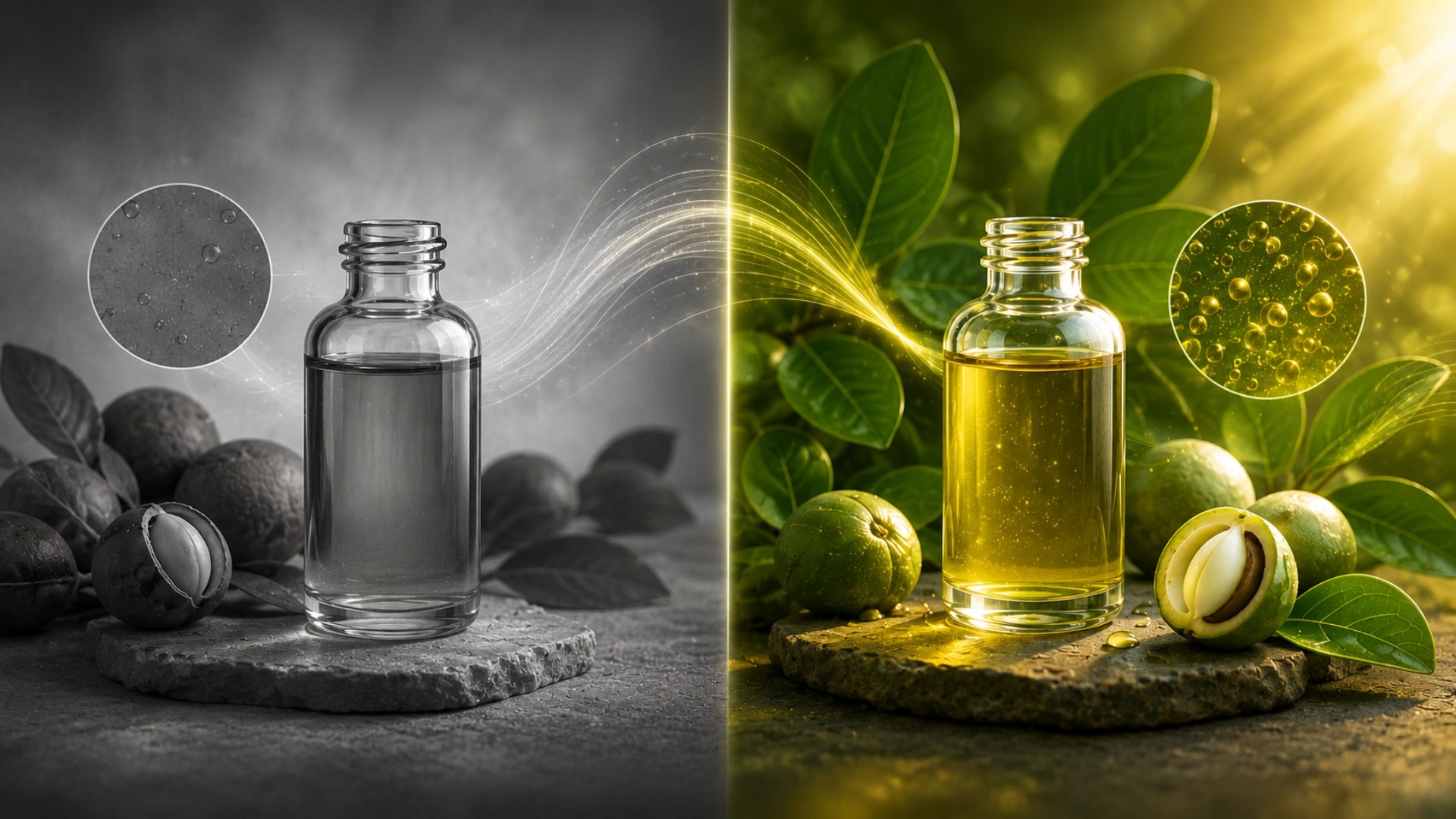
Deep Dive into the Science Behind the 4–5× Efficacy Improvement
For centuries, the golden-green oil pressed from the nuts of Calophyllum inophyllum, known throughout Polynesia as tamanu oil, has been prized as a traditional remedy for wounds, burns, scars, and diverse skin conditions. Today, modern analytical chemistry has not only validated these ancestral uses but has revealed something far more remarkable: the oil's healing power does not reside uniformly throughout the liquid. Rather, it is concentrated in a specific fraction—the polyphenol-rich resin—that, when isolated, demonstrates efficacy 4 to 5 times greater than that of the whole virgin oil. This article explores the scientific foundation of this "synergy effect," examining why tamanu polyphenol represents a paradigm shift in natural skin care and therapeutic application.
1. The Chemical Architecture of Tamanu Oil
To understand why tamanu polyphenol outperforms virgin oil, one must first appreciate the oil's complex chemical composition. Virgin tamanu oil is not a single compound but a sophisticated mixture of lipids and bioactive secondary metabolites.
1.1 The Fatty Acid Foundation
Over 70% of tamanu oil consists of unsaturated fatty acids. Oleic acid (an omega-9 fatty acid) comprises 39–50% of the oil, while linoleic acid (an omega-6 essential fatty acid) accounts for 22–31%. These fatty acids provide the skin with natural building blocks—they moisturize, nourish the skin barrier, and exhibit mild antimicrobial activity. Stearic and palmitic acids (13–14% and 11–14%, respectively) contribute emollient properties.
1.2 The Bioactive "Resin" Fraction
Crucially, virgin tamanu oil contains a resinous fraction that varies from 10% to 30% of the total oil. This resin is where the oil's most potent bioactives reside. It is rich in polyphenols, flavonoids, and pyranocoumarins; compounds responsible for the oil's antioxidant, anti-inflammatory, and antimicrobial properties.
The key bioactive molecules identified include:
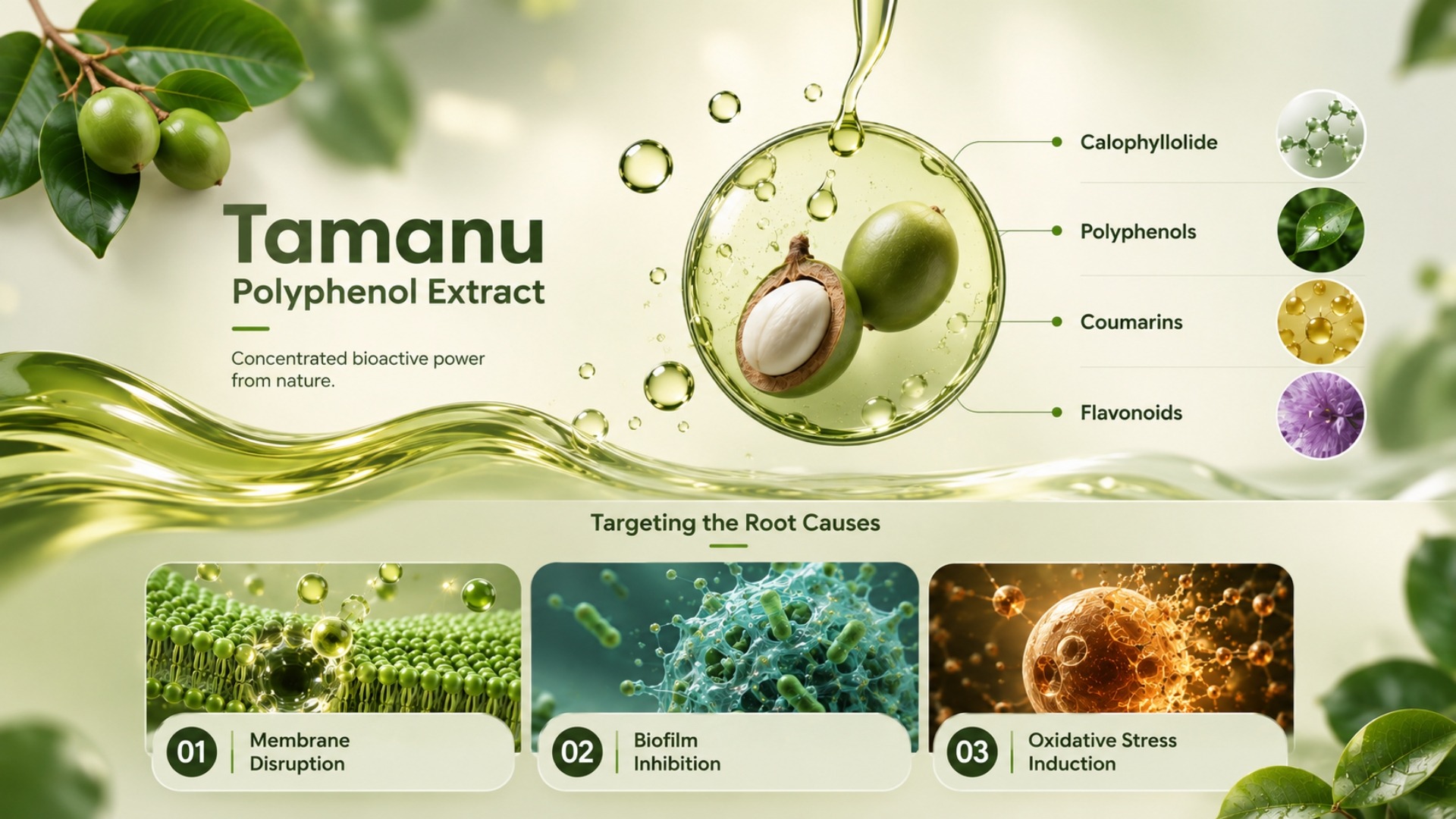
- Calophyllolide, neoflavonoids credited with wound-healing and anti-inflammatory activity
- Various polyphenols exerting potent antioxidant effects
- Coumarins (including calanolide D and 12-oxocalanolide A) phenolic compounds with anticancer, antimicrobial, anti-inflammatory, and wound-healing properties
- Xanthone derivatives; natural antioxidants with demonstrated bioactivity
2. Virgin Oil vs. Polyphenol Extract: The Critical Difference
2.1 What Is "Virgin" Tamanu Oil?
Virgin tamanu oil is produced by cold-pressing the cured nuts of C. inophyllum. This mechanical extraction preserves the oil's natural composition but results in a product where bioactive compounds remain diluted within a large lipid matrix. The fatty acids, while beneficial for skin barrier function, constitute the bulk of the oil and can actually dilute the concentration of phenolic actives.
2.2 What Is Tamanu Polyphenol?
Tamanu polyphenol refers to the concentrated bioactive fraction obtained through selective extraction, most effectively using ethanol from the resinous part of the oil. Research has demonstrated that ethanol extraction is the optimal strategy for recovering phenolic compounds, flavonoids, and pyranocoumarins from tamanu oil.
This extraction process yields two fractions, neutral and acidic resins, both characterized by high concentrations of phenolics. Through advanced separation techniques, researchers have identified fifteen distinct metabolites within these fractions, including compounds never before isolated from natural sources.
2.3 The Concentration Differential
The fundamental difference is one of concentration and purity. While virgin oil contains bioactive compounds diluted within 70%+ fatty acids, the polyphenol extract eliminates much of this lipid "filler," delivering the active principles in a far more concentrated form. This concentration effect alone accounts for a substantial portion of the 4–5× efficacy improvement.
3. The Synergy Effect: Why the Whole Is Greater Than the Sum of Its Parts
The term "synergy effect" in the context of tamanu polyphenol refers to two distinct phenomena: intra-fraction synergy (among the polyphenolic compounds themselves) and formulation synergy (between polyphenols and delivery systems).
3.1 Intra-Fraction Synergy: The Polyphenol Network
The antimicrobial and anti-inflammatory effects of tamanu polyphenol are enhanced through synergy; the fatty acids and polyphenols work together more effectively than either would alone. However, within the polyphenol fraction itself, an even more potent synergy operates:
- Calophyllolide down-regulates pro-inflammatory cytokines (IL-1β, IL-6, TNF-α) while up-regulating the anti-inflammatory cytokine IL-10
- Polyphenols increase free radical scavenging and reduce oxidative stress
- Coumarins provide antimicrobial and antiviral activity
- Flavonoids contribute additional antioxidant protection
When these compounds are concentrated together, as they are in the polyphenol extract, their combined effect exceeds the additive sum of their individual activities. This is true biological synergy: each compound potentiates the others' mechanisms of action.
3.2 Multi-Mechanism Attack
Tamanu polyphenol does not rely on a single mode of action. Research from PPBB ITB has elucidated three distinct mechanisms through which it achieves its superior efficacy:
- Membrane disruption: Polyphenols increase the permeability of microbial cell membranes, causing leakage and cell death
- Biofilm inhibition: Polyphenols prevent bacteria from forming protective biofilms that confer antibiotic resistance
- Oxidative stress induction: Polyphenols increase free radical production within bacterial cells, damaging DNA, proteins, and lipids
This multi-pronged approach makes it exceptionally difficult for microorganisms to develop resistance and a critical advantage over single-mechanism antibiotics.
4. The 4–5× Efficacy Improvement: Evidence from Research
4.1 Antibacterial Efficacy
The most striking evidence for the superiority of tamanu polyphenol comes from antibacterial studies. Research conducted by the PPBB ITB research team demonstrated that tamanu polyphenol inhibits the growth of acne-causing bacteria (Propionibacterium acnes and Staphylococcus epidermidis) with effectiveness 4 to 5 times higher than tetracycline HCl, a widely used commercial antibiotic for skin infections.
This is not merely an incremental improvement. A 4–5× increase in efficacy against a standard antibiotic represents a quantum leap in natural antimicrobial activity.
4.2 Antioxidant and Anti-Inflammatory Superiority
The polyphenol extract and its isolated metabolites demonstrate increased free radical scavenging, antioxidant, anti-inflammatory, antimicrobial, and antimycobacterial activity compared to both virgin tamanu oil and its de-resinated lipid phase.
In practical terms, this means:
- Greater protection against oxidative stress and DNA damage
- More potent reduction of inflammation through cytokine modulation
- Enhanced wound healing through multiple biological pathways
4.3 UV Protection
Virgin tamanu oil already demonstrates significant UV absorption, with a sun protection factor ranging from 18 to 22 even at low concentrations. The concentrated polyphenol fraction, with its higher density of UV-absorbing compounds (including calophyllolides and other chromophores), would logically provide even greater photoprotective efficacy.
5. Delivery Technology: The Liposome Multiplier
The synergy effect extends beyond the chemistry of the extract itself. Advanced formulation technologies, particularly liposome encapsulation, further amplify the efficacy of tamanu polyphenol.
Liposomes are microscopic vesicles that can encapsulate active ingredients, protecting them from degradation and enabling enhanced penetration into the skin. When tamanu polyphenol is delivered via liposome technology, the active compounds reach deeper skin layers where they can exert their effects more effectively. This represents a formulation synergy that multiplies the already impressive intrinsic activity of the polyphenols.
6. Clinical and Biological Validation
6.1 Wound Healing
Research by Ansel et al. (2016) demonstrated that tamanu oil emulsion accelerates wound closure in both keratinocyte and fibroblast cells, surpassing the effects of vitamin C (positive control). Given that the polyphenol fraction contains the primary wound-healing actives (calophyllolide and related compounds), the concentrated extract would be expected to show even greater efficacy.
6.2 Cellular Regeneration
Clinical evidence demonstrates that a 3% dosage of tamanu oil significantly activates cellular regeneration (7% increase), while a 25% concentration blocks 86% of pro-inflammatory factors (IL-1α). The polyphenol extract, being far more concentrated in the active principles responsible for these effects, can achieve comparable or superior results at lower dosages.
6.3 Anti-Inflammatory Cytokine Modulation
Calophyllolide has been shown to prevent prolonged inflammatory processes by down-regulating pro-inflammatory cytokines (IL-1β, IL-6, TNF-α) while up-regulating the anti-inflammatory cytokine IL-10. This immunomodulatory effect is central to tamanu polyphenol's therapeutic potential in inflammatory skin conditions.
7. Why This Matters: Practical Implications
7.1 For Skin Care
The 4–5× efficacy improvement translates to tangible benefits:
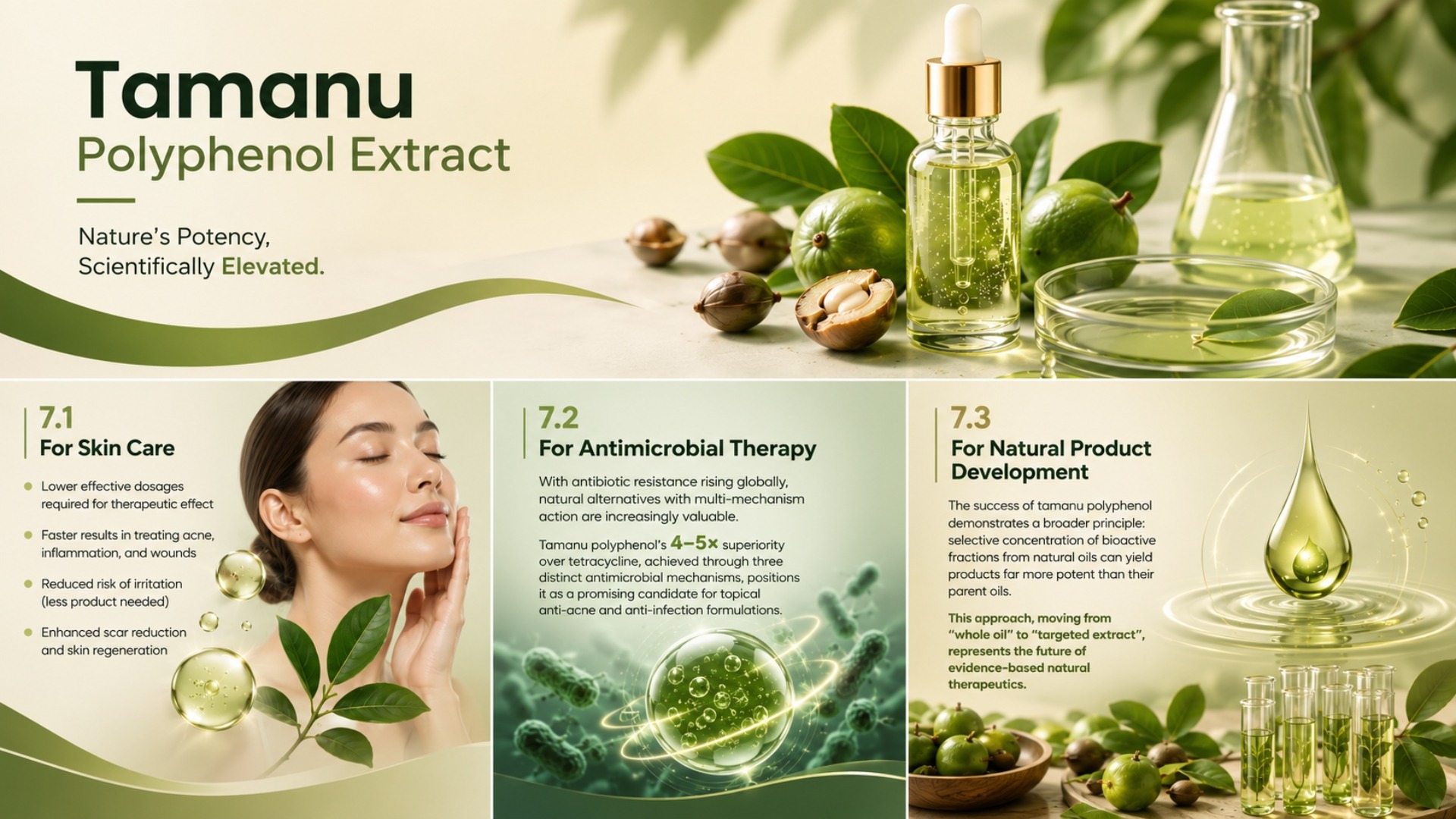
- Lower effective dosages required for therapeutic effect
- Faster results in treating acne, inflammation, and wounds
- Reduced risk of irritation (less product needed)
- Enhanced scar reduction and skin regeneration
7.2 For Antimicrobial Therapy
With antibiotic resistance rising globally, natural alternatives with multi-mechanism action are increasingly valuable. Tamanu polyphenol's 4–5× superiority over tetracycline, achieved through three distinct antimicrobial mechanisms, positions it as a promising candidate for topical anti-acne and anti-infection formulations.
7.3 For Natural Product Development
The success of tamanu polyphenol demonstrates a broader principle: selective concentration of bioactive fractions from natural oils can yield products far more potent than their parent oils. This approach, moving from "whole oil" to "targeted extract", represents the future of evidence-based natural therapeutics.
8. Conclusion
The synergy effect behind tamanu polyphenol's 4–5× superiority over virgin oil is rooted in concentration, purification, and biological synergy. By selectively extracting the resinous polyphenol fraction, rich in calophyllolide, coumarins, flavonoids, and other bioactives, researchers have created a product that delivers the oil's healing principles in their most potent form.
The mechanisms are clear: membrane disruption, biofilm inhibition, oxidative stress induction, cytokine modulation, and free radical scavenging all operate in concert. When combined with advanced delivery technologies like liposome encapsulation, the result is a natural therapeutic agent that rivals and, in some cases, surpasses conventional pharmaceuticals.
Tamanu polyphenol is not merely "better" than virgin oil, it represents a fundamentally different category of product which one that harnesses the full synergistic potential of nature's chemistry through the lens of modern science.
References
- Dweck, A.C. & Meadows, T. (2002). Tamanu (Calophyllum inophyllum) - the African, Asian, Polynesian and Pacific Panacea. International Journal of Cosmetic Science, 24(6), 341-348.
- Cassien, M., et al. (2021). Improving the Antioxidant Properties of Calophyllum inophyllum Seed Oil from French Polynesia: Development and Biological Applications of Resinous Ethanol-Soluble Extracts. Antioxidants, 10(2), 199.
- Said, T., et al. (2007). Anti-UV activity of tamanu oil for eye protection. European Journal of Pharmaceutical Sciences, 30, 203-210.
- Said, T., et al. (2009). Ocular burn therapy with Calophyllum inophyllum oil. Ophthalmologica, 223, 52-59.
- Ansel, J.L., et al. (2016). Biological Activity of Polynesian Calophyllum inophyllum Oil Extract on Human Skin Cells. Planta Medica, 82(11-12), 961-966.
- PPBB ITB & ST Morita Farma Research Collaboration (2025). Tamanu Polyphenol antibacterial efficacy study. Suara Merdeka, March 7, 2025.
- Hapsari, S., et al. (2023). Impact of solvent type, solvent-water concentration, and number of stages on the extraction of coumarin mixture from tamanu oil and its antioxidant activity. Arabian Journal of Chemistry.
- Anti-inflammatory and wound healing activities of calophyllolide isolated from Calophyllum inophyllum Linn. (2017). PLOS ONE.
- In vivo Wound Healing Activity of Tamanu Oil Extracted by Cold-Pressed and Hot-Pressed Methods (2024). Journal UGM.
- Tamanu oil: Chemical composition and bioactivity. MDedge Dermatology.
- Phytochemical Profiles and Anticancer Effects of Calophyllum inophyllum L. Extract (2023). PMC.
- Tamanu Oil: The Traditional Remedy With Modern Scientific Evidence. Klayrity Health Library.
- Characterization of a cosmetic raw material "Tamanu Oil" from French Polynesia (2008). Thieme-Connect.
- Tamanu oil resinous ethanol-soluble extracts: bioactive compound recovery. OA.las.ac.cn.
- Tamanu oil polyphenol vs. tetracycline HCl efficacy comparison. Tribunjateng.com, March 7, 2025.
Editorial Team:
- Afifah Rahma Adila, S.Si.
- Fajar Fadillah Denitasari, S.T.
Illustrator:
- Rafi Rif'atul Rizki, S.I.Kom.