Aloin: Active Compounds in Aloe vera and Its Potential Benefits
Author: apt. Shafina Putri Kamila, S.Farm. | Editor-in-Chief: Sandy Akbar Nusantara, S.T., M.B.A. | Published: 10 September 2026
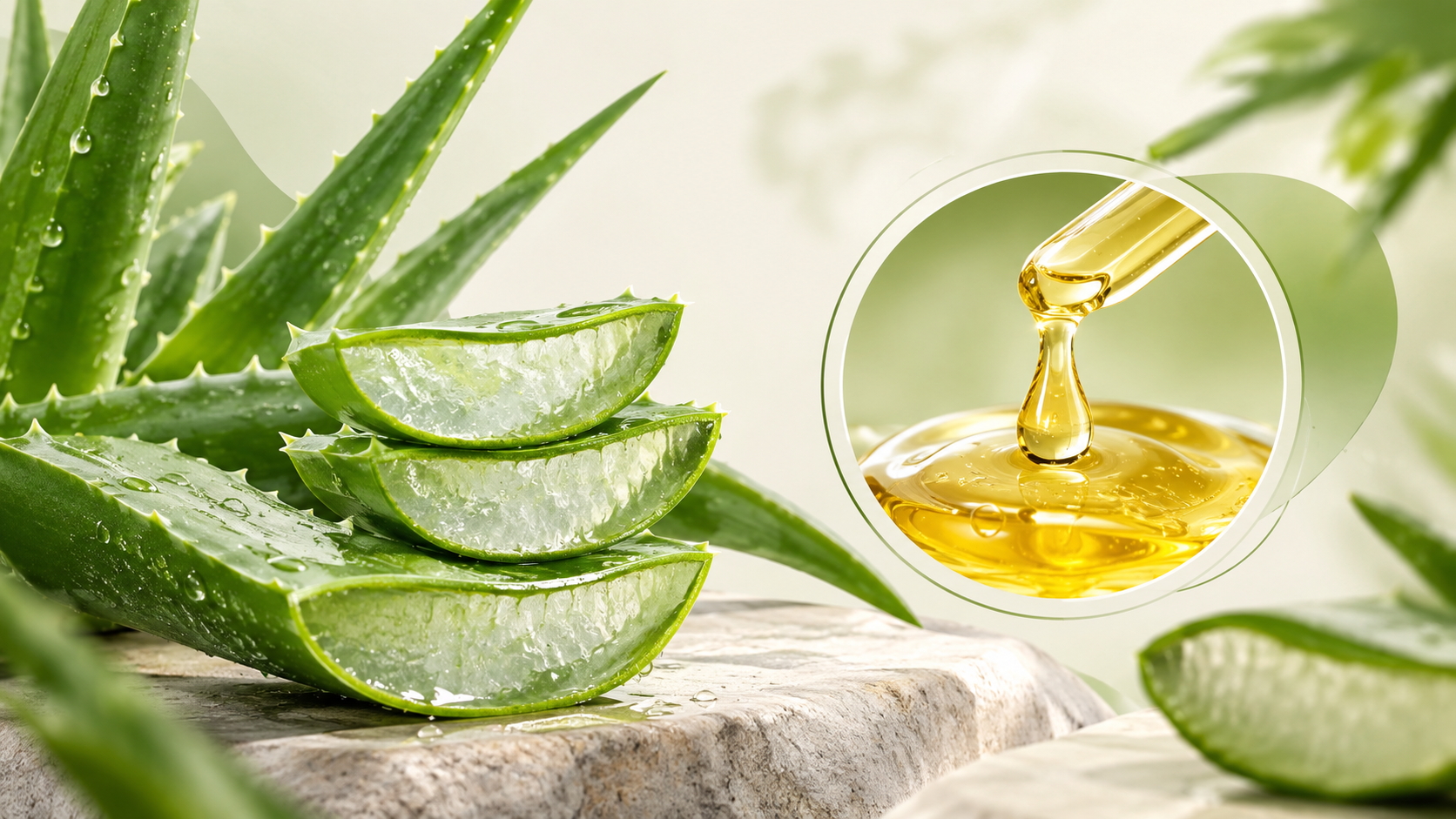
Everyone must be familiar with Aloe vera, a plant that is often mentioned in various health products because it can provide many benefits. Of course, there are many compounds contained in Aloe vera that play a role in providing those various benefits. This time, let’s delve deeper into one of those compounds, namely Aloin.
Getting to Know the Plant Aloe Vera
Aloe vera is a plant that grows in hot and dry environments such as in the Mediterranean, Middle East, North Africa, Central America, and some parts of Asia, especially Northeast Asia1. However, due to this plant's ability to adapt quite well, Aloe vera it has now been cultivated in various parts of the world.
Traditionally, Aloe vera is commonly used to treat skin wounds (including burns, cuts, insect bites, and eczema) as well as some digestive disorders due to its anti-inflammatory, antimicrobial, and wound-healing-properties.
One of the characteristics of the leaves of Aloe vera is the presence of gel inside the leaves, which is enclosed by the outer layer of the leaves. There are various beneficial compounds that can be found in the leaves of Aloe vera, including polysaccharides, anthraquinone, alkylbenzene lectin, derivatives of dehydroabietic acid, salicylic acid, saponins, sterols, and lignin. The most abundant compounds found in each main part of Aloe vera are as follows:
1. Outer Epidermis/Rind (the outermost layer): anthraquinone, pre-anthraquinone, and related glycosides,
2. Pulp/Latex (the inner layer wall): phenolic compounds (anthraquinones, pre-anthraquinones, flavonoids, chromones, anthrones, coumarins, and pyrones),
3. Gel/Inner layer (the inside): contains 99-99.5% water and 0.5-1.0% minerals, vitamins, enzymes, polysaccharides, phenolic compounds, and other organic compounds3, 4.
Aloin and Its Compound Characteristics
Aloin (C21H22O9) is an anthraquinone compound that is also a c-glucoside form of aloe-emodin. Aloin can be found in several parts Aloe vera, including in fresh leaves, leaf exudate (plant substances released spontaneously or intentionally from plants), latex (the inner layer of leaves), and the outer layer of leaves1, 3, 5 . The content of aloin in leaf exudate Aloe vera that is dried is known to reach 30% of the total compound components1. The content of aloin in the epidermal layer of the leaf Aloe vera is much more significant compared to the content in the gel6.
Aloin consists of two diastereoisomers, namely Aloin A or barbaloin and Aloin B or isobarbaloin. Naturally, aloin in Aloe vera is usually found as a mixture of the two diastereoisomers1,7. Studies related to the biosynthesis of Aloin show that Aloin B (the C10,C1′:R,S diastereomer of aloin) is predominantly formed, while Aloin A (C10,C1′:S,S diastereomer of aloin) is formed due to non-enzymatic conversion7.
Activity and Benefits of Aloin and Challenges of Its Application
Research in the past few years has reported various activities possessed by aloin, including anti-inflammatory, antioxidant, antitumor, neuroprotection, and activity anti-organ-injury1.
Aloin is known to have anti-inflammatory activity due to its ability to inhibit NF-κB signaling pathway and suppress Lipopolysaccharide-Induced Inflammatory Response8. In addition, a test related to the ability of Aloin to protect skin fibroblasts from heat-induced oxidative stress damage shows satisfactory results, where aloin was found to do this by reducing overproduction reactive oxygen species such as superoxide anions, hydrogen peroxide and hydroxyl radical and suppressing dissipation oxidative defense system such as glutathione and total superoxide dismutases (SOD)9.
Meanwhile, a test using mice showed the potential of aloin as a hepatoprotective agent against alcohol-induced liver injury by suppressing lipid accumulation through lipid metabolism regulation, reducing oxidative stress, and inhibiting lipopolysaccharide (LPS)-induced inflammatory injury10.
Aloin also has the potential as a chemoprotective agent against doxorubicin-induced cardiotoxicity through research results using mice where aloin was found to protect the heart from lipid peroxidation and restore levels of antioxidative defenses such as glutathione, catalase, and superoxide dismutase11.
One of the challenges in the development and research related to the use of aloin as a preparation is its low stability and rapid degradation in aqueous solution. A study related to this showed that Aloin dissolved in phosphate buffer with 0.5% DMSO (pH 7.4) stored at 37 degrees Celsius in the dark underwent degradation and only 40% remained after the first 12 hours. This should be kept in mind especially when considering the validity of research results that use aqueous aloin solution as their subject, because that solution has timeframe that is limited12.
However, this does not hinder the potential of aloin to be developed into a beneficial preparation. By further exploring the characteristics of the compound and developing appropriate formulation technology, along with further exploration of its activities, the potential of aloin in various aspects can continue to be optimized.
Looking for high-quality Aloin marker compounds for your research?
Get the products you need easily.
Click the purchase button below!

References
1. Catalano, A., Ceramella, J., Iacopetta, D., Marra, M., Conforti, F., Lupi, F. R., Gabriele, D., Borges, F., & Sinicropi, M. S. (2024). Aloe vera―An Extensive Review Focused on Recent Studies. Foods, 13(13), 2155. https://doi.org/10.3390/foods13132155
2. Sánchez, M., González-Burgos, E., Iglesias, I., & Gómez-Serranillos, M. P. (2020). Pharmacological Update Properties of Aloe Vera and its Major Active Constituents. Molecules, 25(6), 1324. https://doi.org/10.3390/molecules25061324
3. Jangra, A., Sharma, G., Sihag, S., & Chhokar, V. (2022). The dark side of miracle plant-Aloe vera: a review. Molecular Biology Reports, 49(6), 5029–5040. https://doi.org/10.1007/s11033-022-07176-9
4. Puia, A., Puia, C., Moiș, E., Graur, F., Fetti, A., & Florea, M. (2021). The phytochemical constituents and therapeutic uses of genus Aloe: A review. Notulae Botanicae Horti Agrobotanici Cluj-Napoca, 49(2), 12332. https://doi.org/10.15835/nbha49212332
5. Nalimu, F., Oloro, J., Kahwa, I., & Ogwang, P. E. (2021). Review on the phytochemistry and toxicological profiles of Aloe vera and Aloe ferox. Future Journal of Pharmaceutical Sciences, 7(1), 145. https://doi.org/10.1186/s43094-021-00296-2
6. Saleem, M. (2022). ALOE BARBADENSIS MILLER: A COMPREHENSIVE REVIEW. Pakistan Journal of Science, 73(4). https://doi.org/10.57041/pjs.v73i4.388
7. Wamer, W. G., Vath, P., & Falvey, D. E. (2003). In vitro studies on the photobiological properties of aloe emodin and aloin A. Free Radical Biology and Medicine, 34(2), 233–242. https://doi.org/10.1016/s0891-5849(02)01242-x
8. Luo, X., Zhang, H., Wei, X., Shi, M., Fan, P., Xie, W., Zhang, Y., & Xu, N. (2018). Aloin Suppresses Lipopolysaccharide-Induced Inflammatory Response and Apoptosis by Inhibiting the Activation of NF-κB. Molecules, 23(3), 517. https://doi.org/10.3390/molecules23030517
9. Liu, F.-W., Liu, F.-C., Wang, Y.-R., Tsai, H.-I., & Yu, H.-P. (2015). Aloin Protects Skin Fibroblasts from Heat Stress-Induced Oxidative Stress Damage by Regulating the Oxidative Defense System. PLOS ONE, 10(12), e0143528. https://doi.org/10.1371/journal.pone.0143528
10. Birari, L., Wagh, S., Patil, K. R., Mahajan, U. B., Unger, B., Belemkar, S., Goyal, S. N., Ojha, S., & Patil, C. R. (2020). Aloin alleviates doxorubicin-induced cardiotoxicity in rats by abrogating oxidative stress and pro-inflammatory cytokines. Cancer Chemotherapy and Pharmacology, 86(3), 419–426. https://doi.org/10.1007/s00280-020-04125-w
11. Cui, Y., Ye, Q., Wang, H., Li, Y., Xia, X., Yao, W., & Qian, H. (2014). Aloin protects against chronic alcoholic liver injury via attenuating lipid accumulation, oxidative stress and inflammation in mice. Archives of Pharmacal Research, 37(12), 1624–1633. https://doi.org/10.1007/s12272-014-0370-0
12. Zimbone, S., Romanucci, V., Zarrelli, A., Giuffrida, M. L., Sciacca, M. F. M., Lanza, V., Campagna, T., Maugeri, L., Petralia, S., Consoli, G. M. L., Di Fabio, G., & Milardi, D. (2024). Exploring the therapeutic potential of Aloin: unraveling neuroprotective and anticancer mechanisms, and strategies for enhanced stability and delivery. Scientific Reports, 14(1), 16731. https://doi.org/10.1038/s41598-024-67397-9
Editorial Team:
- Rafi Rif'atul Rizki, S.I.Kom.