An Overview of Phyllanthin, An Important Compound of the Meniran Plant
Author: apt. Shafina Putri Kamila, S.Farm. | Editor-in-Chief: Sandy Akbar Nusantara, S.T., M.B.A. | Published: July 18, 2026
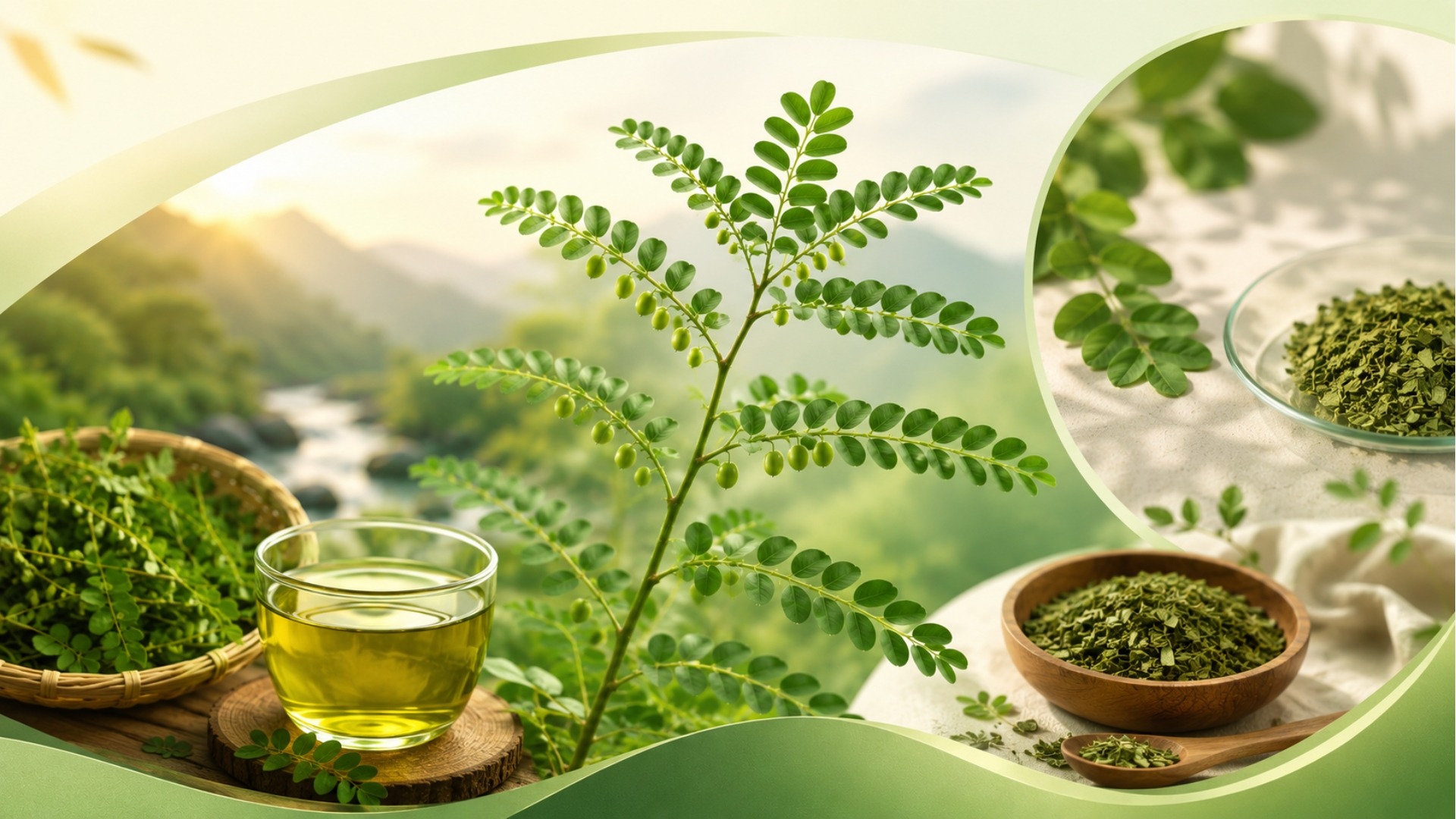
Meniran Plant (Phyllanthus niruri) has traditionally been used as a herbal solution for various complaints, including kidney stones, stomach acid, cough, and infections1. This has triggered numerous studies exploring the various benefits of this plant to be utilized more effectively and efficiently. In any research and product development using the meniran plant, a reference compound is needed in the standardization process to ensure the quality and consistency of the meniran plant material used, commonly referred to as a marker compound. The marker compound used for the standardization of the meniran plant is Phyllanthin.
Marker Compound of the Meniran Plant, Phyllanthin
Phyllanthin is a lignan compound bioactive unique to the plant group Phyllanthaceae, including Phyllanthus niruri or meniran. This makes phyllanthin determined as a marker compound for plants of this group in various research processes and quality control.
Currently, there are various methods that have been developed to characterize and analyze the abundance of phyllanthin in a sample using UV-Spectrophotometry, Liquid Chromatography, HPTLC, and HPLC, either with UV or Fluorescence2 detectors. This analysis needs to be conducted to ensure that the sample being tested is indeed a plant from the Phyllanthaceae, not another species that may appear similar at first glance. The determination of the accuracy of this sample is done by comparing the analysis results of the sample with a reference compound which is pure phyllanthin.
Pharmacological Role of Phyllanthin Based on Various Studies
In addition to being beneficial as a marker compound, phyllanthin is also one of the compounds that contributes significantly to several pharmacological activities of the Phyllanthaceae. Here are some roles of Phyllanthin in health based on various studies that have been conducted.
1. Antioxidant Effects
In research that tested the activity of free-radical scavenging phyllanthin on HepG2 cells pre-treated with CCl4, phyllanthin was found to increase GSH levels and induce antioxidant effects in the DPPH test. Meanwhile, another test showed that phyllanthin is a good superoxide inhibitor in a test comparing its activity with ascorbic acid3.
2. Hepatoprotective Effects
In tests on rats given ethanol-induced liver injury, pre-treatment using phyllanthin, it was found to provide an antagonistic effect against the decrease %MTT. Phyllanthin also enhances antioxidant capacity in rat hepatocytes that had previously decreased due to ethanol induction4.
3. Immunosuppressive Agent
Rats given treatment phyllanthin routinely for 14 days orally showed results indicating that phyllanthin provides a significant inhibitory effect on both cellular and humoral immune responses4. Meanwhile, other tests showed that phyllanthin suppresses the inflammatory process by mediating the release of inflammatory signaling molecules through NF‐κB, MAPKs, and PI3K‐Akt signal transducing pathway6.
4. Anticancer Effects
Phyllanthin was found to counteract the effects of diethylnitrosamine in inducing liver carcinoma in rats. MTT analysis also showed that phyllanthin inhibits HepG2 cell growth at certain doses7. Other studies indicate that phyllanthin can synergize with doxorubicin in its anticancer activity against breast cancer cells8.
In addition to several examples above, there are many other activities of phyllanthin that are currently being further explored in various studies. It is hoped that the results of these studies can continue to be developed into products that can provide broader benefits.
Are you looking for high-quality Phyllanthin marker compounds for your research?
Get the products you need easily.
Click the purchase button below!

Referensi:
1. Lee, N. Y. S., Khoo, W. K. S., Adnan, M. A., Mahalingam, T. P., Fernandez, A. R., & Jeevaratnam, K. (2016). The pharmacological potential of Phyllanthus niruri. Journal of Pharmacy and Pharmacology, 68(8), 953–969. https://doi.org/10.1111/jphp.12565
2. Rai, P., Patil, P., & Rajput, S. (2009). Simultaneous Determination of Phyllanthin and Hypophyllanthin in Herbal formulation by Derivative Spectrophotometry and Liquid Chromatography. Pharmacognosy Magazine, 5(18), 151–158. https://www.cabdirect.org/cabdirect/abstract/20093110318
3. Omoruyi, S. I., Delport, J., Kangwa, T. S., Rahman, Z., Hussein, A. A., Lorke, D. E., & Ekpo, O. E. (2024). An update on the bioactivities and health benefits of two plant-derived lignans, phyllanthin and hypophyllanthin. Advances in Traditional Medicine, 24(4), 1011–1036. https://doi.org/10.1007/s13596-023-00738-7
4. Chirdchupunseree, H., & P ramyothin, P. (2010). Protective activity of phyllanthin in ethanol-treated primary culture of rat hepatocytes. Journal of Ethnopharmacology, 128(1), 172–176. https://doi.org/10.1016/j.jep.2010.01.003
5. Ilangkovan, M., Jantan, I., & Bukhari, S. N. A. (2016). Phyllanthin from Phyllanthus amarus inhibits cellular and humoral immune responses in Balb/C mice. Phytomedicine, 23(12), 1441–1450. https://doi.org/10.1016/j.phymed.2016.08.002
6. Harikrishnan, H., Jantan, I., Haque, M. A., & Kumolosasi, E. (2018). Phyllanthin from Phyllanthus amarus inhibits LPS‐induced proinflammatory responses in U937 macrophages via downregulation of NF‐κB/MAPK/PI3K‐Akt signaling pathways. Phytotherapy Research, 32(12), 2510–2519. https://doi.org/10.1002/ptr.6190
7. You, Y., Zhu, F., Li, Z., Zhang, L., Xie, Y., Chinnathambi, A., Alahmadi, T. A., & Lu, B. (2021). Phyllanthin prevents diethylnitrosamine (DEN) induced liver carcinogenesis in rats and induces apoptotic cell death in HepG2 cells. Biomedicine & Pharmacotherapy, 137, 111335. https://doi.org/10.1016/j.biopha.2021.111335
8. Abdel-Sattar, O. E., Allam, R. M., Al-Abd, A. M., El-Halawany, A. M., El-Desoky, A. M., Mohamed, S. O., Sweilam, S. H., Khalid, M., Abdel-Sattar, E., & Meselhy, M. R. (2023). Hypophyllanthin and Phyllanthin from Phyllanthus niruri Synergize Doxorubicin Anticancer Properties against Resistant Breast Cancer Cells. ACS Omega, 8(31), 28563–28576. https://doi.org/10.1021/acsomega.3c02953
Editorial Team:
- Rafi Rif'atul Rizki, S.I.Kom.