1. The Calophyllum Genus – A Tropical Biodiversity Treasure
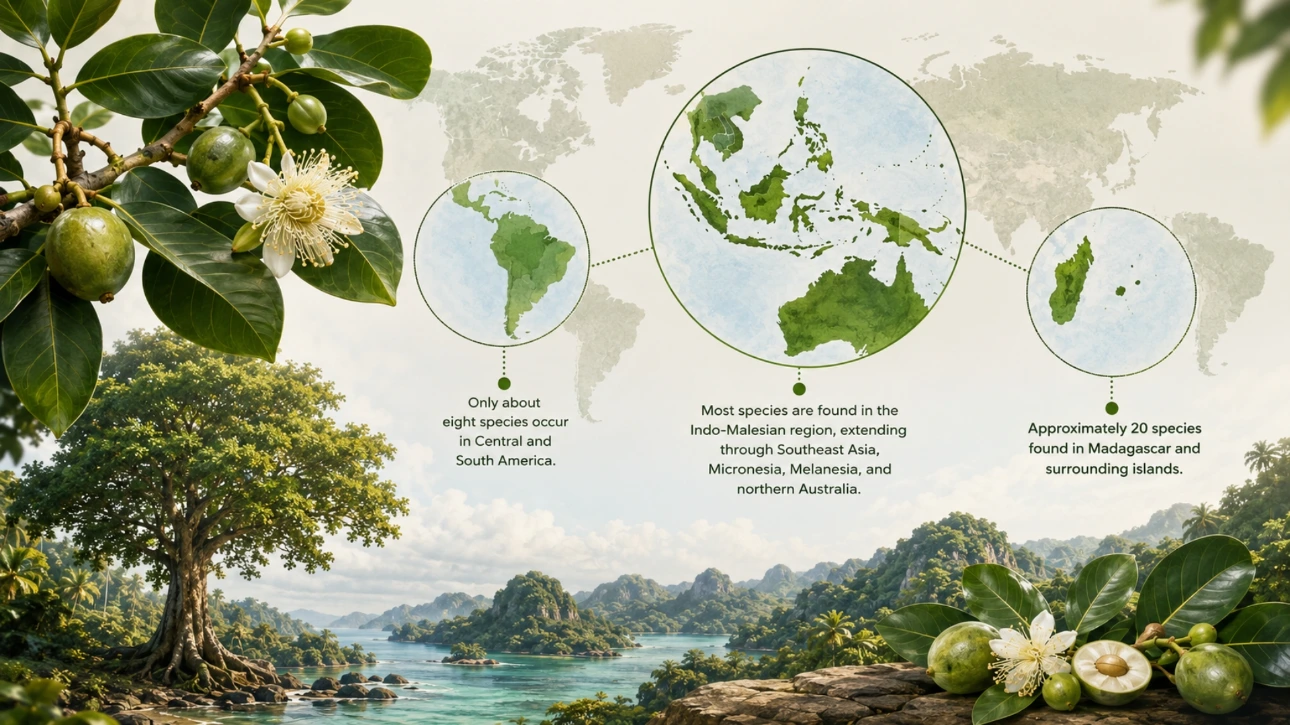
The genus Calophyllum (family Calophyllaceae, formerly Clusiaceae) comprises approximately 190–200 species of evergreen trees distributed across the tropics. The name derives from Greek kalos ("beautiful") and phyllon ("leaf"), reflecting the aesthetic appeal of these trees. Most species are found in the Indo-Malesian region, extending through Southeast Asia, Micronesia, Melanesia, and northern Australia. Only about eight species occur in Central and South America, with approximately 20 found in Madagascar and surrounding islands.
Indonesia stands as a global center of Calophyllum diversity. An astonishing 85 species (45% of the global total) grow within the Indonesian archipelago. The distribution center lies in Kalimantan (Borneo), where 65 species have been documented, followed by Sumatra (approximately 35 species), the Malay Peninsula (about 40 species), and Papua (approximately 35 species).
To date, around 62 species of Calophyllum have been investigated for their secondary metabolite content, with only 6 species originating from Indonesia having been studied. This represents a significant research gap, suggesting that Indonesia's Calophyllum biodiversity remains largely unexplored for its chemical and bioactive potential.
According to the IUCN, eight Calophyllum species in Indonesia are nearing extinction. Among these, Calophyllum insularum, found exclusively in West Papua, Indonesia, is classified as Endangered (EN). Other Indonesian endemics facing threats include C. parvifolium. Habitat loss due to deforestation and land-use change remains the primary threat to these species.
2. Indonesian Endemics: Calophyllum teysmannii and Calophyllum soulattri
2.1 Calophyllum teysmannii Miq.
Calophyllum teysmannii is a tree native to Southeast Asia, ranging from southern Indochina to western Malesia. In Indonesia, it is found in Borneo and Sumatra. Habitat and Ecology: This evergreen tree grows from 3 to 40 meters tall and thrives in peat swamps, secondary forests on mangroves, flat-lying mixed dipterocarp forests, kerangas vegetation (a type of moist heath forest on acidic, nutrient-poor sandy soils), and ridges in lower montane rainforests at elevations up to 1,220 meters.
Traditional Uses and Bioactive Potential: The wood of C. teysmannii is rather hard and used in construction. Of greater scientific interest, however, is its phytochemical profile. The species is known to produce calanolide B, a non-nucleoside HIV-1 reverse transcriptase inhibitor—which can be sustainably harvested by wounding the bark. Additionally, the compound kalanon (calanone) from this species has demonstrated activity against colorectal cancer cells. These findings position C. teysmannii as a species of considerable pharmaceutical interest beyond its traditional timber value.
2.2 Calophyllum soulattri Burm.f.
Calophyllum soulattri has a broad distribution spanning Indo-China (Cambodia, Thailand, Vietnam) through Malesia (Indonesia, Malaysia, Philippines, Papua New Guinea) to the Solomon Islands and northern Australia.
Distribution in Indonesia: The species occurs in Maluku Islands, North Maluku, and West Sumatra. It is a mid-canopy tree reaching up to 55 meters in height with a diameter at breast height of up to 37 cm.
Local Names: Known as sulatri (Sundanese, Java), slatri (Javanese, Java), and malang-malang (Bangka). In Kalimantan, it is called nyamplung, nyanyamplungan, bintang, or bintangor.
Traditional and Pharmacological Uses: The timber is prized for masts, spars, and house construction. In Indonesian traditional medicine, an infusion of the root is applied externally to alleviate rheumatic pains, while the seed oil is used topically to treat rheumatism, wounds, and various skin problems. Both C. soulattri and C. gracilentum have been evaluated for their antibacterial activity. The species also produces latex used for various purposes, and its fruits are edible (though sour and not to be consumed in large quantities).
3. Calophyllolide: Chemistry and Discovery
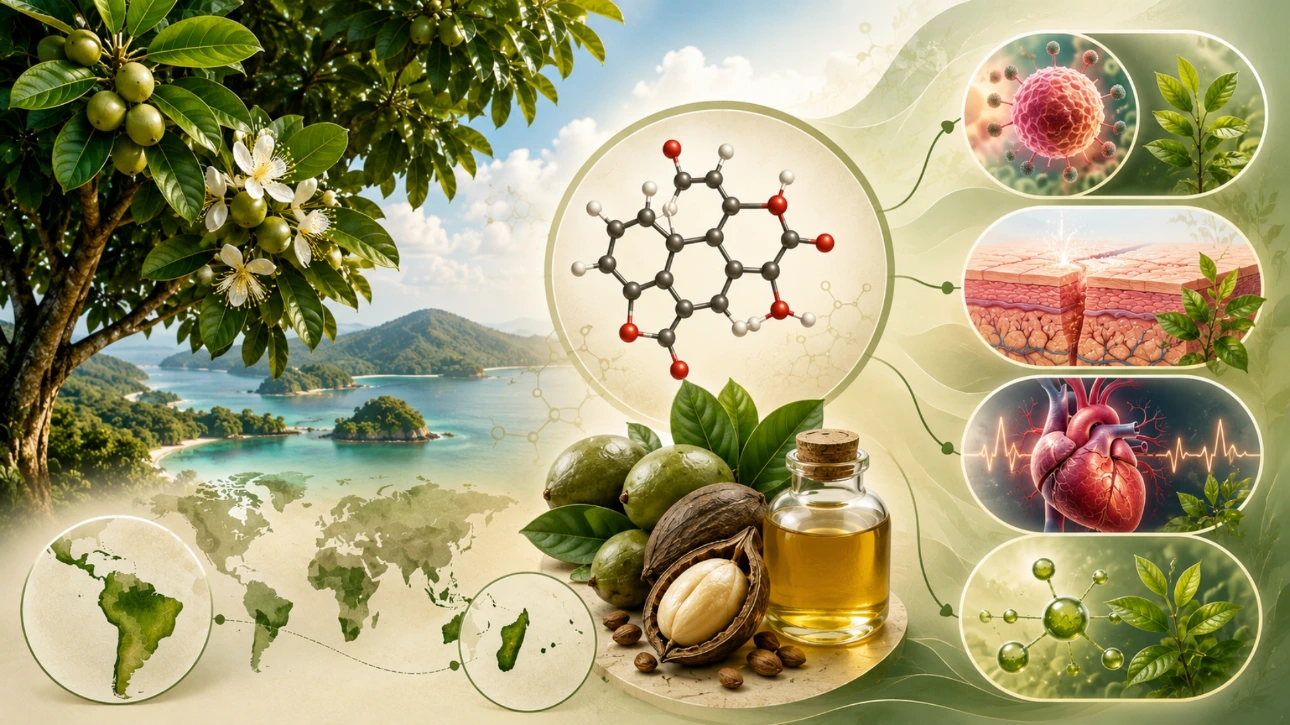
Calophyllolide is a dipyranocoumarin belonging to the class of prenylated neoflavonoids. It is predominantly isolated from Calophyllum inophyllum L. (commonly known as Tamanu or Nyamplung), though it has also been identified in C. bracteatum and C. brasiliense.
Occurrence and Quantification: In C. inophyllum fruits, calophyllolide is found exclusively in the nuts (not in the flesh), with dried nuts containing approximately 2 mg·g⁻¹. Seeds harvested in September show the highest content, reaching 0.23%. Calophyllolide constitutes a major component (4.35%) of C. inophyllum nut oil, alongside other bioactive neoflavonoids such as calanolide A, inophyllum D, and inophyllum B.
Distinctive Chemical Features: Calophyllum secondary metabolites are characterized by specific structural motifs. Coumarins from this genus typically possess an alkyl or phenyl group at C-4 (hence termed 4-alkyl/phenyl coumarins), while chromanones feature vicinal methyl groups at C-2 and C-3. Chromano-coumarins, a class to which calophyllolide belongs, are compounds with a 2,3-dimethylchromanone framework fused to a coumarin ring.
4. Multifaceted Bioactivities of Calophyllolide
4.1 Anti-Inflammatory Activity
Calophyllolide has demonstrated potent anti-inflammatory effects through multiple mechanisms. In LPS-stimulated RAW 264 macrophages and UVB-induced HaCaT keratinocytes, calophyllolide significantly down-regulated pro-inflammatory cytokines IL-1β, IL-6, and TNF-α, while simultaneously up-regulating the anti-inflammatory cytokine IL-10. This cytokine modulation profile provides a clear functional advantage over its co-occurring isomers inocalophyllin A and inocalophyllin B.
4.2 Wound Healing
A landmark 2017 study by Nguyen et al. established calophyllolide's role in accelerating wound healing. Key findings include:
Calophyllolide effectively promoted wound closure in mouse models without causing body weight loss
It reduced fibrosis formation and decreased collagenous scar tissue
The compound reduced myeloperoxidase (MPO) activity and promoted M2 macrophage polarization—a shift toward the reparative macrophage phenotype
M2-related gene expression was up-regulated, which is beneficial to the wound healing process
This study was the first to indicate a plausible role for calophyllolide in accelerating wound healing through anti-inflammatory mechanisms.
4.3 Cardiovascular Protection
Calophyllolide has shown promising cardioprotective activity against doxorubicin-induced myocardial damage. In vitro studies on H9c2 cells demonstrated that calophyllolide:
Enhanced cell viability in a dose-dependent manner—at 150 μg/mL, cell survival increased to 90–99%
Reduced LDH leakage and reactive oxygen species (ROS) levels
Lowered troponin levels and inflammatory mediators
These findings underscore calophyllolide's potential as a candidate for further investigation as a cardio-protective agent.
4.4 Antioxidant Activity
The antioxidant potential of calophyllolide has been confirmed through DPPH free radical scavenging assays and nitric oxide (NO) free radical scavenging assays. As a major component (4.35%) of C. inophyllum nut oil, calophyllolide contributes significantly to the oil's overall antioxidant capacity
4.5 Other Bioactivities
Anticoagulant activity: Calophyllolide has been identified as a complex coumarin anticoagulant, though this activity is structurally dependent and not replicated by synthetic analogs lacking the 4-phenyl and pyran moieties
Antimicrobial activity: Pharmacological studies have confirmed calophyllolide's activity against Staphylococcus aureus
Osteogenic activity: Calophyllolide dose-dependently enhances alkaline phosphatase (ALP) activity, indicating potential in bone differentiation
5. Tamanu Oil: Traditional Wisdom Meets Modern Science
5.1 Traditional Use
Calophyllum inophyllum L., locally called "tamanu" in French Polynesia and "nyamplung" in Indonesia, is an evergreen pantropical tree growing mostly along seashores. Its bark, leaves, and fruits have long been used in traditional medicine.
The oil expressed from the nuts—Tamanu oil—has been a sacred healing oil in Polynesian communities, traditionally used for:
Tattoo aftercare
Sunburn repair
Wound dressing
Treatment of various skin ailments and mucous membrane lesions
In Indonesia, nyamplung oil has similarly been applied topically for wound healing and skin problems, with the species itself being planted as a shade tree or ornamental.
5.2 Chemical Composition
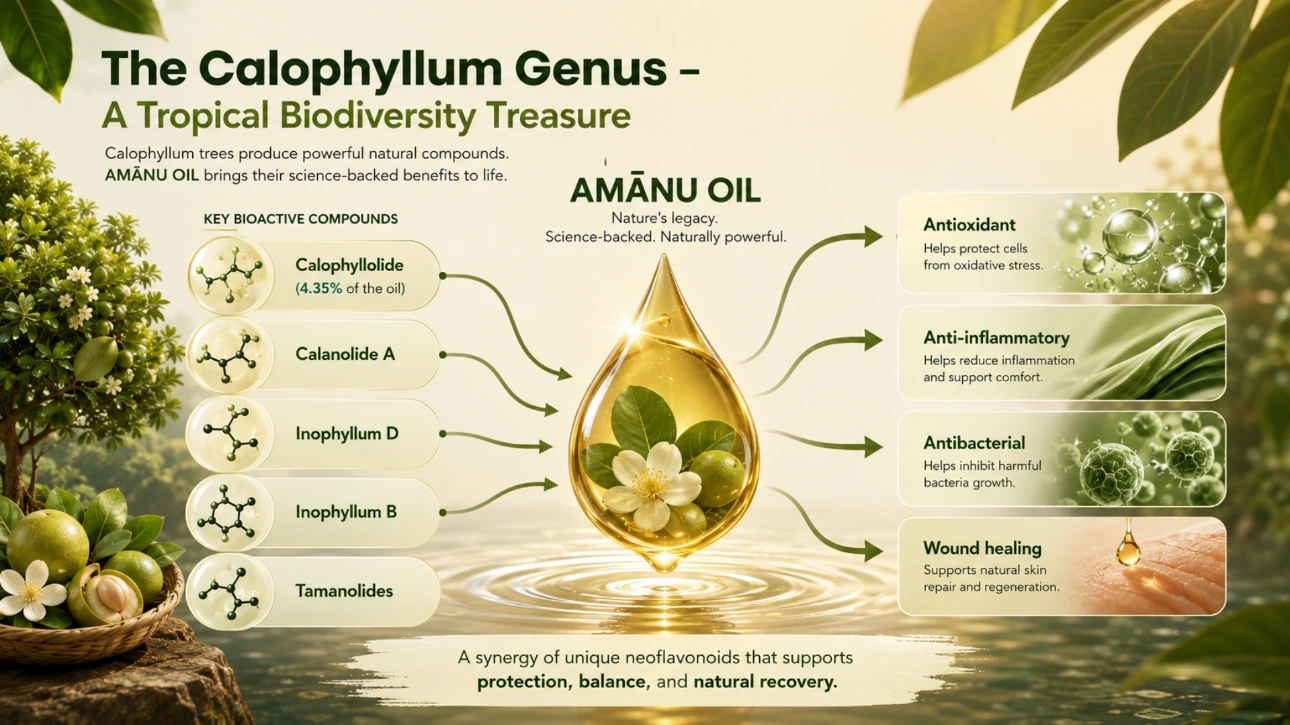
What distinguishes Tamanu oil from common vegetable oils is its unique resinous fraction alongside conventional fatty acids. This resinous part contains bioactive secondary metabolites predominantly composed of neoflavonoids, including:
Calophyllolide (4.35% of the oil)
Calanolide A
Inophyllum D
Inophyllum B
Tamanolides
The fatty acid profile includes oleic acid, linoleic acid, palmitic acid, and stearic acid, providing emollient and barrier-repair properties.
5.3 Scientific Validation
Bioassays and various assessments of Tamanu oil have revealed numerous biological activities:
Antioxidant
Anti-inflammatory
Antibacterial
Wound healing
These properties bring scientific evidence to the traditional uses of this oil on human skin healing. Cell-based studies have demonstrated that Tamanu oil extract promotes cell proliferation, glycosaminoglycan and collagen production, and wound healing activity.
6. High Cosmetic Potential: From Laboratory to Skincare
6.1 Scientific Evidence for Skincare Applications
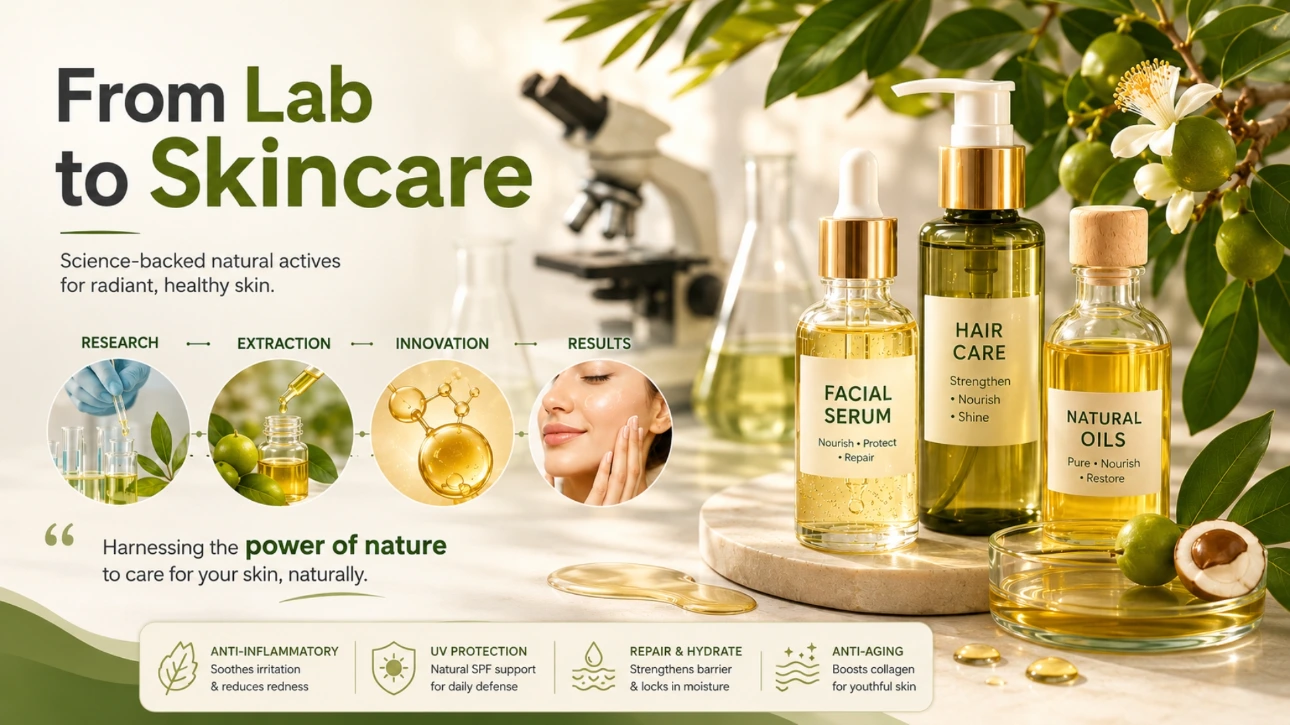
Cosmetic Benefit | Key Mechanism and Evidence |
Anti-inflammatory skincare | Calophyllolide down-regulates IL-1β, IL-6, TNF-α; inhibits UVB-induced inflammation in HaCaT keratinocytes |
UV protection | Tamanu oil provides SPF 6.3 ± 0.4 and PA 2.9 ± 0.6 in clinical tests; nyamplung oil offers 85% protection against UVB-induced DNA damage; extracts can reach ultra category SPF (>17) at 10-15% concentration |
Wound healing and anti-scarring | Promotes collagen synthesis; accelerates wound closure; calophyllolide promotes M2 macrophage polarization and reduces fibrosis |
Anti-acne and antimicrobial | Effective against acne-associated bacteria |
Barrier repair and moisturization | Rich in omega-6 and omega-9 fatty acids; nourishes dry skin and repairs skin barrier |
Anti-aging | Promotes collagen and glycosaminoglycan synthesis; improves fine line appearance |
6.2 Cosmetic Formulation and INCI Status
INCI Name: Calophyllum Inophyllum Seed Oil
Recommended Use Concentrations:
Facial serums and skincare products: 2–10%
Standalone facial oils: 20–50% or used neat
Product Applications:
Nourishing creams and face oils
Massage oils
Hair care products
Mature skin care
After-shave care
Sunscreens and after-sun repair
Foundations, concealers, BB/CC creams (as a nourishing base)
Sensory Profile: Tamanu oil has a rich, slightly viscous texture that provides long-lasting hydration and dries to a dry and soft after-feel. Benefit claims include anti-inflammatory, antimicrobial, antioxidant, healing, hydrating, smoothing, and skin protection properties.
6.3 Indonesian Innovation: Calophyllolide Commercialization
Indonesian researchers are actively developing calophyllolide for commercial applications. The PPBB Research Center for Bioscience and Biotechnology at Institut Teknologi Bandung (ITB), in collaboration with EBM Scitech, St Morita Farma, and Euterria, is working on developing calophyllolide as a novel active ingredient for the pharmaceutical and cosmetic industries.
Calophyllolide is recognized for its anti-inflammatory, antioxidant, and skin-healing potential, playing an important role in skin healing and cellular health. This collaboration is part of the 2025 applied research scheme titled "Calophyllolide as a New Active Substance in the Pharmaceutical and Cosmetic Industry".
The research team successfully established isolation and purification methods for calophyllolide in August 2025. These methods include:
Silica gel adsorption and batchwise solvent extraction using hexane and ethyl acetate mixtures
Liquid-liquid extraction (LLE) with solvent-PLF ratio of 5:2
Optimization studies to achieve 12.92% purity, 8.03% yield, and 95.02% recovery
The project received funding approval from Kemendiktisaintek (Indonesia's Ministry of Education, Culture, Research, and Technology) in June 2025, marking a significant step toward the industrialization of Indonesia's biodiversity-derived natural actives.
7. Conclusion: Biodiversity, Conservation, and Sustainable Innovation
Indonesia's Calophyllum genetic resources represent an extraordinary treasure trove of natural active ingredients. From the endemic C. teysmannii and C. soulattri to the widely distributed C. inophyllum, these trees offer a rich palette of bioactive compounds—calophyllolide foremost among them—with proven applications in wound healing, cardiovascular protection, anti-inflammation, and high-performance cosmetics.
The journey of calophyllolide from a compound identified in traditional healing oils to a scientifically validated active ingredient with pharmaceutical and cosmetic applications—exemplifies the value of bioprospecting grounded in biodiversity. However, this potential must be realized responsibly. With eight Calophyllum species threatened with extinction in Indonesia, conservation and sustainable sourcing are not optional but imperative.
Key priorities moving forward:
Expanded phytochemical screening of Indonesia's 85 Calophyllum species, of which only 6 have been studied
Sustainable cultivation and harvesting practices to ensure wild populations are not depleted
Development of standardized extraction and purification methods for consistent, high-quality calophyllolide production
Integration of traditional knowledge with modern scientific validation
Equitable benefit-sharing with local communities who have stewarded these resources for generations
As Indonesia positions itself as a global player in the natural cosmetics and pharmaceutical industries, Calophyllum-derived compounds like calophyllolide offer a compelling narrative of biodiversity-driven innovation—one that honors traditional wisdom, embraces scientific rigor, and safeguards natural heritage for future generations.
References:
Mindat.org. Calophyllum insularum.
Perpustakaan Digital ITB. Calophyllum genus diversity and secondary metabolites.
Wikipedia Bahasa Indonesia. Bintangur (Calophyllum).
Tropical Plants Database. Calophyllum teysmannii Miq.
PROSEA. Calophyllum soulattri (Plant Resources of South-East Asia).
Nguyen VL, et al. Anti-inflammatory and wound healing activities of calophyllolide isolated from Calophyllum inophyllum Linn. PLoS One. 2017.
Butaud JF, Ho R, et al. Tamanu oil and skin active properties: from traditional to modern cosmetic uses. Oléagineux, Corps Gras, Lipides. 2018;5(5):D504.
Antioxidant in cosmeceutical products containing Calophyllum inophyllum oil. OCL Journal.
Laboratory Assessment of Nyamplung Seeds (Calophyllum inophyllum Linn) Base Cosmetic Products. JPPIPA. 2024.
Givaudan Active Beauty. Nyamplung oil product specification.
Clinical tests of Tamanu oil UV-protective effects. Journal of Natural Medicines. 2025.
Anti-inflammatory and UV-protective activities of isolated compounds from Calophyllum inophyllum L. in immune and skin cell models. Journal of Natural Medicines. 2025.
PPBB ITB, EBM Scitech, St Morita Farma, and Euterria collaboration. Tribunjabar.id. 2025.
Calophyllolide separation from Calophyllum inophyllum oil by silica gel adsorption. ITS Scholar. 2019.
Editorial Team:
- Afifah Rahma Adila, S.Si.
- Fajar Fadillah Denitasari, S.T.
Illustrator:
- Rafi Rif'atul Rizki, S.I.Kom.