TAMANU POLYPHENOL: INDONESIA'S STANDARDIZED BREAKTHROUGH IN NATURAL SKINCARE INNOVATION
Author: Adrian S. Siregar, Ph.D. | Editor-in-Chief: Sandy Akbar Nusantara, S.T., M.B.A. | Published: July 09, 2026
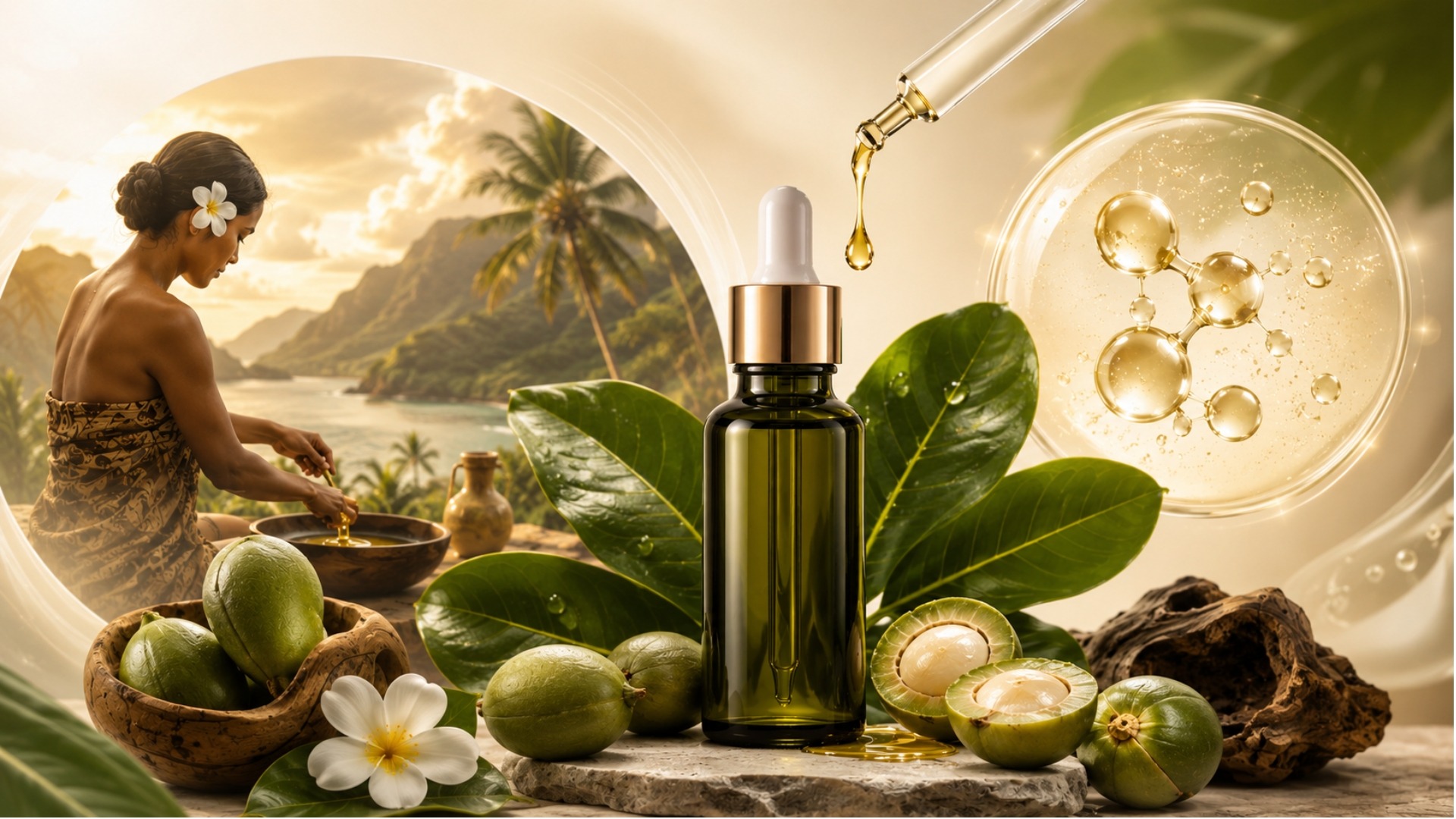
Introduction: From Traditional Oil to Standardized Active
The journey of Calophyllum inophyllum, from a traditional healing oil revered in Polynesian and Indonesian cultures to a scientifically validated cosmetic ingredient, has taken a significant leap forward with the development of Tamanu Polyphenol. While calophyllolide represents one specific neoflavonoid with targeted bioactivities, Tamanu Polyphenol encompasses a broader spectrum of bioactive compounds that together deliver superior skin health benefits. This article explores the scientific foundation, development, and commercial potential of Tamanu Polyphenol as an Indonesian innovation in natural skincare.
The Science of Tamanu Polyphenol
Chemical Composition
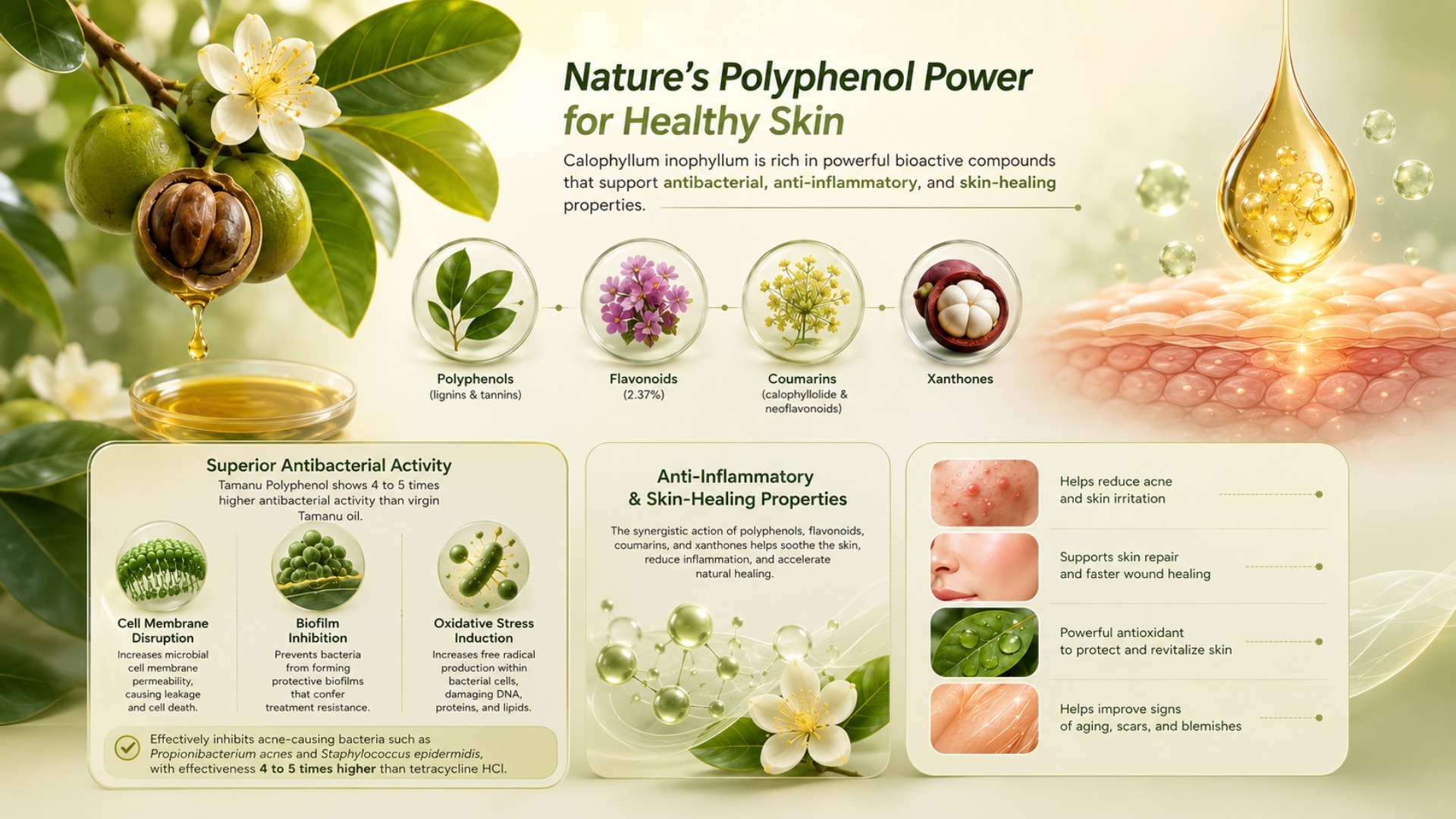
Calophyllum inophyllum (Nyamplung) is rich in phenolic and flavonoid compounds. Quantitative analysis reveals that the oil contains total phenolic content of 25.1 mg GAE/g oil and total flavonoid content of 6.4 mg QE/g oil. The polyphenolic fraction encompasses:
Polyphenols (lignins and tannins)
Flavonoids (2.37% in methanolic crude extracts)
Coumarins (including calophyllolide and other neoflavonoids)
Xanthones
Superior Antibacterial Activity
Research conducted by the PPBB ITB research team has demonstrated that Tamanu Polyphenol exhibits antibacterial activity 4 to 5 times higher than that of virgin Tamanu oil. This enhanced activity is attributed to the concentrated polyphenolic fraction, which works through multiple mechanisms:
Mechanism | Description |
Cell membrane disruption | Increases microbial cell membrane permeability, causing leakage and cell death |
Biofilm inhibition | Prevents bacteria from forming protective biofilms that confer treatment resistance |
Oxidative stress induction | Increases free radical production within bacterial cells, damaging DNA, proteins, and lipids |
The compound effectively inhibits acne-causing bacteria such as Propionibacterium acnes and Staphylococcus epidermidis, with effectiveness 4 to 5 times higher than tetracycline HCl—a commonly used antibiotic for skin infections.
Anti-Inflammatory and Skin-Healing Properties
Tamanu oil has long been recognized for its antioxidant, anti-inflammatory, antibacterial, and wound healing properties. The polyphenolic fraction contributes significantly to these activities through synergistic action of multiple bioactive compounds. Tamanu Polyphenol has been shown to address various skin concerns including acne, irritation, anti-aging effects, and camouflage of blemishes and scars.
MarkHerb: From Academic Research to Commercial Innovation
The Vision Behind MarkHerb
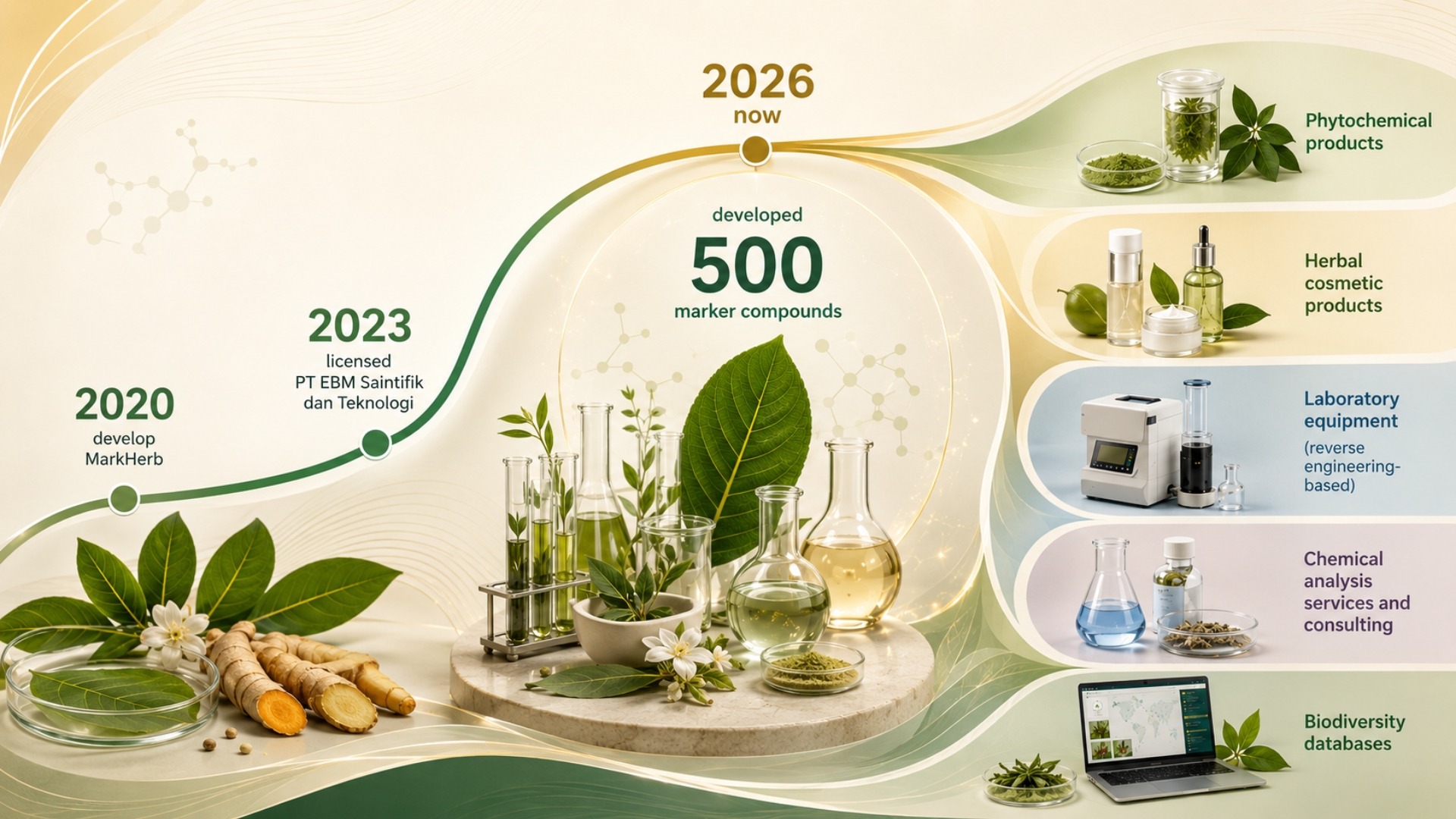
MarkHerb was launched in 2020 by Prof. Dr. Elfahmi, a Professor at the School of Pharmacy, Institut Teknologi Bandung (ITB). The spin-off company emerged from a critical challenge: Indonesian herbal researchers and industries faced significant difficulties in obtaining marker compounds for quality control, relying on expensive imported standards with long indent times and high shipping costs.
Prof. Elfahmi's firsthand experience as a compiler of the Indonesian Herbal Pharmacopoeia revealed the most critical obstacle in herbal research, the difficulty in obtaining reliable markers. This realization drove his determination to establish an Indonesian producer of marker compounds.
MarkHerb's Growth and Impact
Today, MarkHerb has developed over 500 marker compounds from various herbal plants. The company offers markers at more affordable prices, with easier accessibility, and quality equal to or even better than foreign brands.
In 2023, MarkHerb was officially licensed to PT EBM Saintifik dan Teknologi (EBM Scitech), a research and development company, by Institut Teknologi Bandung (ITB). EBM Scitech has expanded its portfolio to include:
Phytochemical products
Herbal cosmetic products
Laboratory equipment (reverse engineering-based)
Chemical analysis services and consulting
Biodiversity databases
Recognition and Awards
Prof. Elfahmi received the "Karya Anak Bangsa" (Child of the Nation) award from the Indonesian Ministry of Health at the 60th National Health Day event in November 2024, recognizing his contributions to the development of marker compounds for medicinal plants. This achievement reflects the broader impact of MarkHerb in strengthening Indonesia's self-sufficiency in herbal medicine and cosmetic raw materials.
Research Funding and Support
The research project titled "Penelitian dan Pengembangan Bahan Baku dan/atau Produk Kosmetik dari Tamanu Polifenol" (Research and Development of Raw Materials and/or Cosmetic Products from Tamanu Polyphenol) is led by Prof. Elfahmi and sponsored by PT. ST. Morita Farma in 2025. This initiative is part of a broader applied research scheme that includes "Calophyllolide sebagai zat aktif baru dalam industri farmasi dan kosmetik" (Calophyllolide as a new active substance in the pharmaceutical and cosmetic industry), also led by Prof. Elfahmi.
Synergy with Calophyllolide Research
Tamanu Polyphenol and calophyllolide represent complementary approaches to harnessing the bioactive potential of Calophyllum inophyllum:
Aspect | Calophyllolide | Tamanu Polyphenol |
Focus | Specific neoflavonoid compound | Broad polyphenolic fraction |
Bioactivity | Anti-inflammatory, wound healing, cardioprotective | Antibacterial, anti-inflammatory, antioxidant |
Application | Pharmaceutical and cosmetic active ingredient | Standardized cosmetic active and quality marker |
Development | PPBB ITB with EBM Scitech and St Morita Farma | MarkHerb/EBM Scitech with ST Morita Farma |
The availability of standardized Tamanu Polyphenol from MarkHerb enables researchers and formulators to accurately measure and optimize bioactive components, driving the development of science-backed, high-performance cosmetic products rooted in Indonesia's natural heritage.
Significance for Indonesia's Natural Product Industry
Reducing Import Dependency
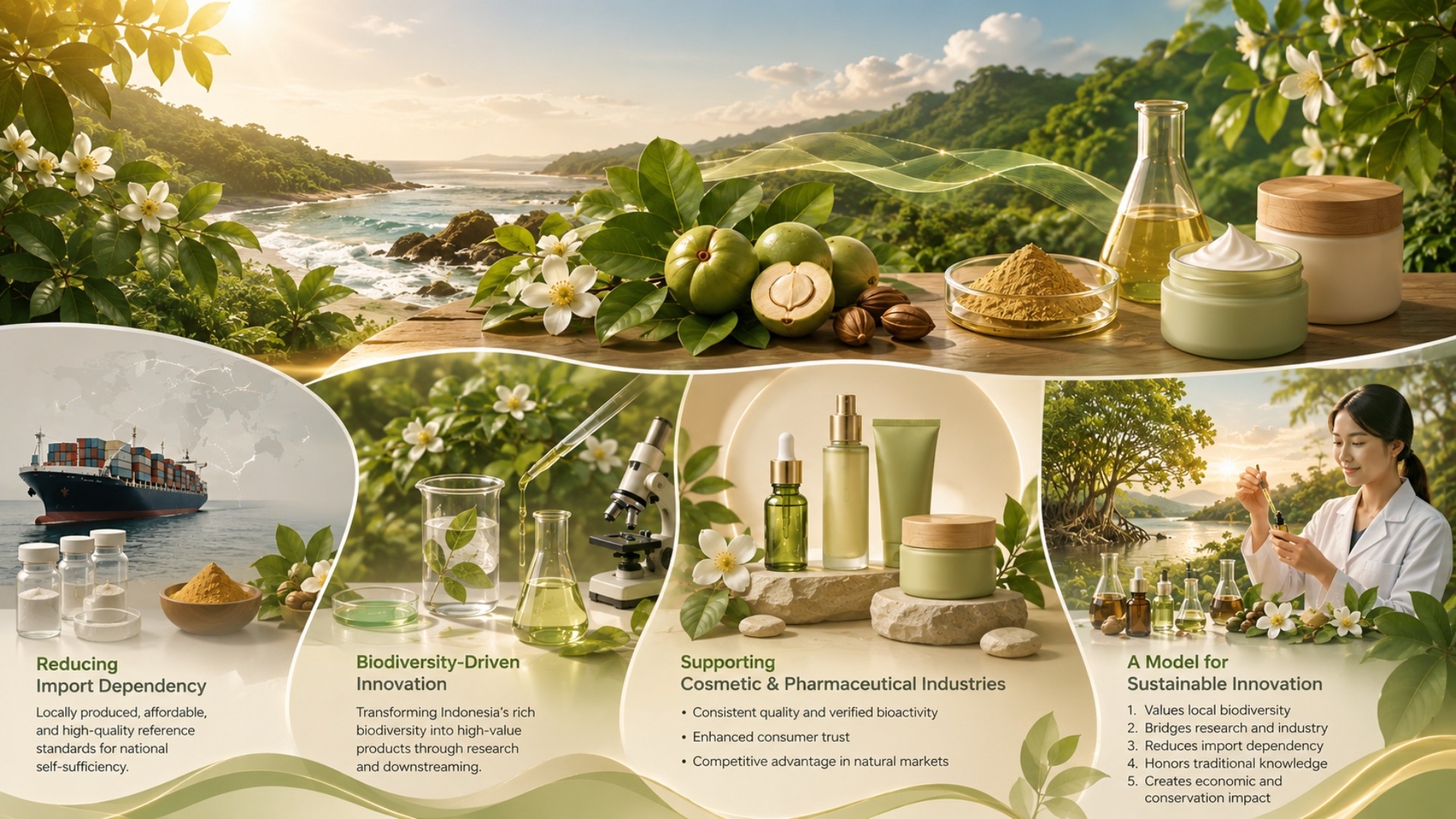
Indonesia has historically relied on imported marker compounds for herbal research and quality control, incurring high costs. MarkHerb addresses this gap by providing locally produced, affordable, and high-quality reference standards. This strengthens national self-sufficiency in pharmaceutical and cosmetic raw materials.
Biodiversity-Driven Innovation
By focusing on Calophyllum inophyllum, a species abundant across Indonesia's coastline, MarkHerb demonstrates how local biodiversity can be transformed into high-value commercial products. The development of Tamanu Polyphenol exemplifies the downstreaming (hilirisasi) of research output into products that benefit society.
Supporting the Cosmetic and Pharmaceutical Industries
Standardized Tamanu Polyphenol enables cosmetic manufacturers to formulate products with:
Consistent quality and verified bioactivity
Enhanced consumer trust through scientifically validated ingredients
Competitive advantage in the growing natural cosmetics market
Conclusion: A Model for Sustainable Innovation
Tamanu Polyphenol represents more than just a cosmetic ingredient. It embodies a model for sustainable innovation that:
Values local biodiversity as a source of high-value bioactive compounds
Bridges academic research and commercial application through spin-off companies
Reduces dependency on imported raw materials while strengthening national self-sufficiency
Honors traditional knowledge with modern scientific validation
Creates economic opportunities while promoting conservation of Indonesia's botanical heritage
The journey from traditional Tamanu oil to standardized Tamanu Polyphenol, and from academic research to commercial products like the Euterria Series, illustrates the power of integrating scientific rigor with local wisdom. As Prof. Elfahmi and his team continue to explore the full potential of Indonesia's Calophyllum resources, Tamanu Polyphenol stands as a testament to what can be achieved when biodiversity, research, and industry converge toward a common goal: delivering the best of nature through the best of science.
References:
PPBB ITB dan ST Morita Farma Kembangkan Produk Inovatif Berbasis Tamanu Polyphenol. Suara Merdeka. 2025.
Total phenolic and flavonoid content of Calophyllum inophyllum oil. Repository.i3l.ac.id.
Identification of phytochemical compounds in Calophyllum inophyllum leaves. Ingentaconnect.
Tamanu oil and skin active properties: from traditional to modern cosmetic uses. OCL Journal.
Markherb, Inovasi dari Guru Besar SF ITB yang Dorong Pertumbuhan Industri Obat Herbal Nasional. itb.ac.id. 2024.
Mengenal Prof. Elfahmi, Guru Besar ITB, Peraih Penghargaan di Hai Fest 2024 atas Inovasi Pengembangan Senyawa Baku Herbal. Aspirasiku. 2024.
Bersama EBM Scitech, SITH ITB Bahas Peluang Riset Kolaborasi dengan UiTM Malaysia. sith.itb.ac.id. 2023.
Penelitian – Sekolah Farmasi ITB. fa.itb.ac.id. 2025.
Elfahmi Menjabat Rektor Institut Teknologi Sumatera Periode 2026-2030. wartasekolah.id.
Markherb, Inovasi dari Guru Besar SF ITB yang Dorong Pertumbuhan Industri Obat Herbal Nasional. itb.ac.id - MarkHerb product range.
Editorial Team:
- Afifah Rahma Adila, S.Si.
- Fajar Fadillah Denitasari, S.T.
Illustrator:
- Rafi Rif'atul Rizki, S.I.Kom.