THE INDONESIA ADVANTAGE: STRATEGIC SOURCING FOR GEOGRAPHIC PURITY
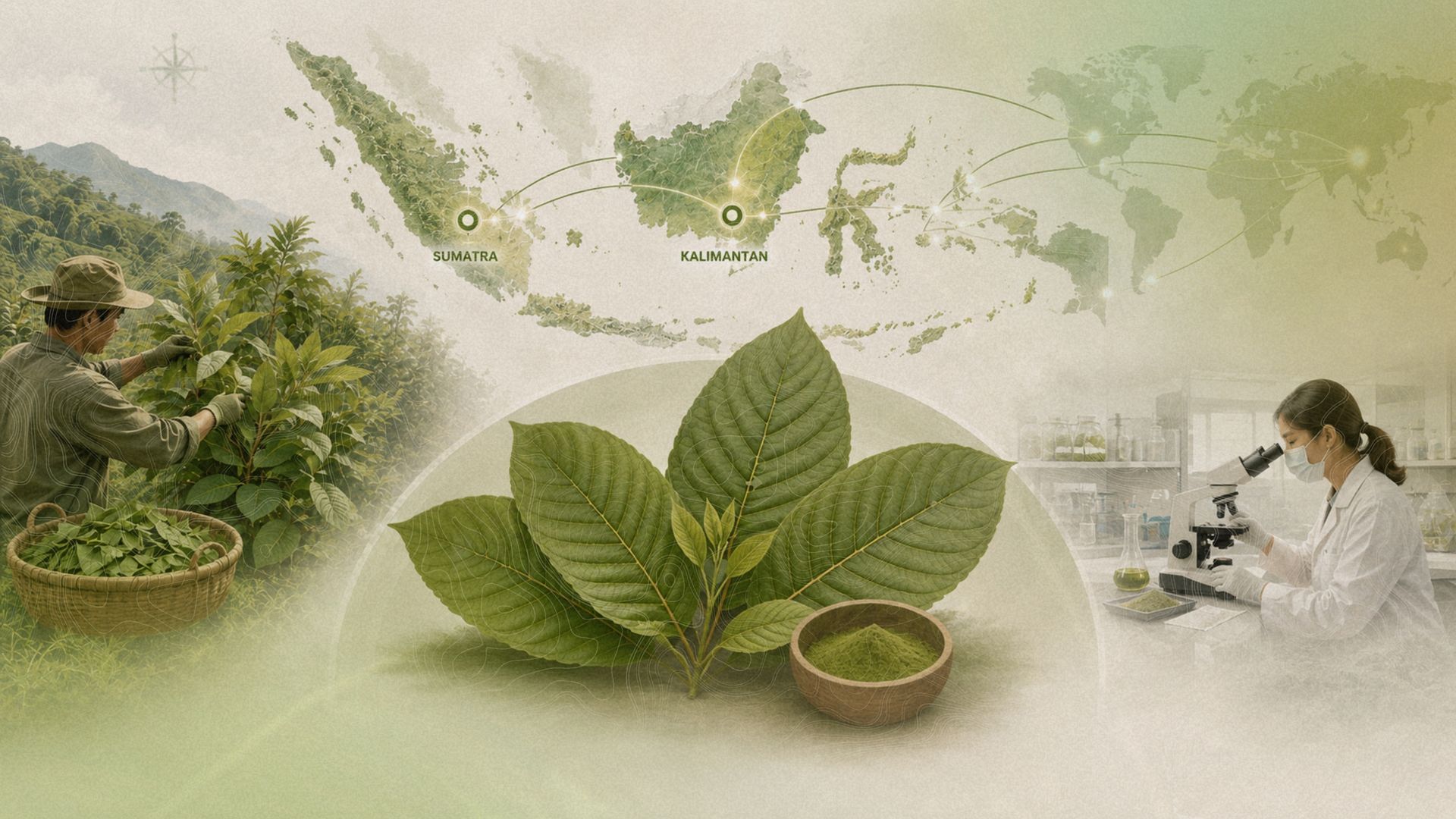
Indonesia has established itself as the world’s primary source of kratom (Mitragyna speciosa), with the islands of Sumatra and Kalimantan forming the backbone of the global supply chain.1 However, for international buyers seeking consistent, high-purity extracts, geographic origin is only the starting point. True quality assurance demands a deeper understanding of plant physiology, supply chain architecture, and seasonal dynamics. This article outlines the key pillars of strategic sourcing for geographic purity and why Indonesian leaf, when sourced with scientific rigor, offers a distinct competitive advantage.
Young Leaves, Cleaner Chemistry: The Diastereomer Advantage
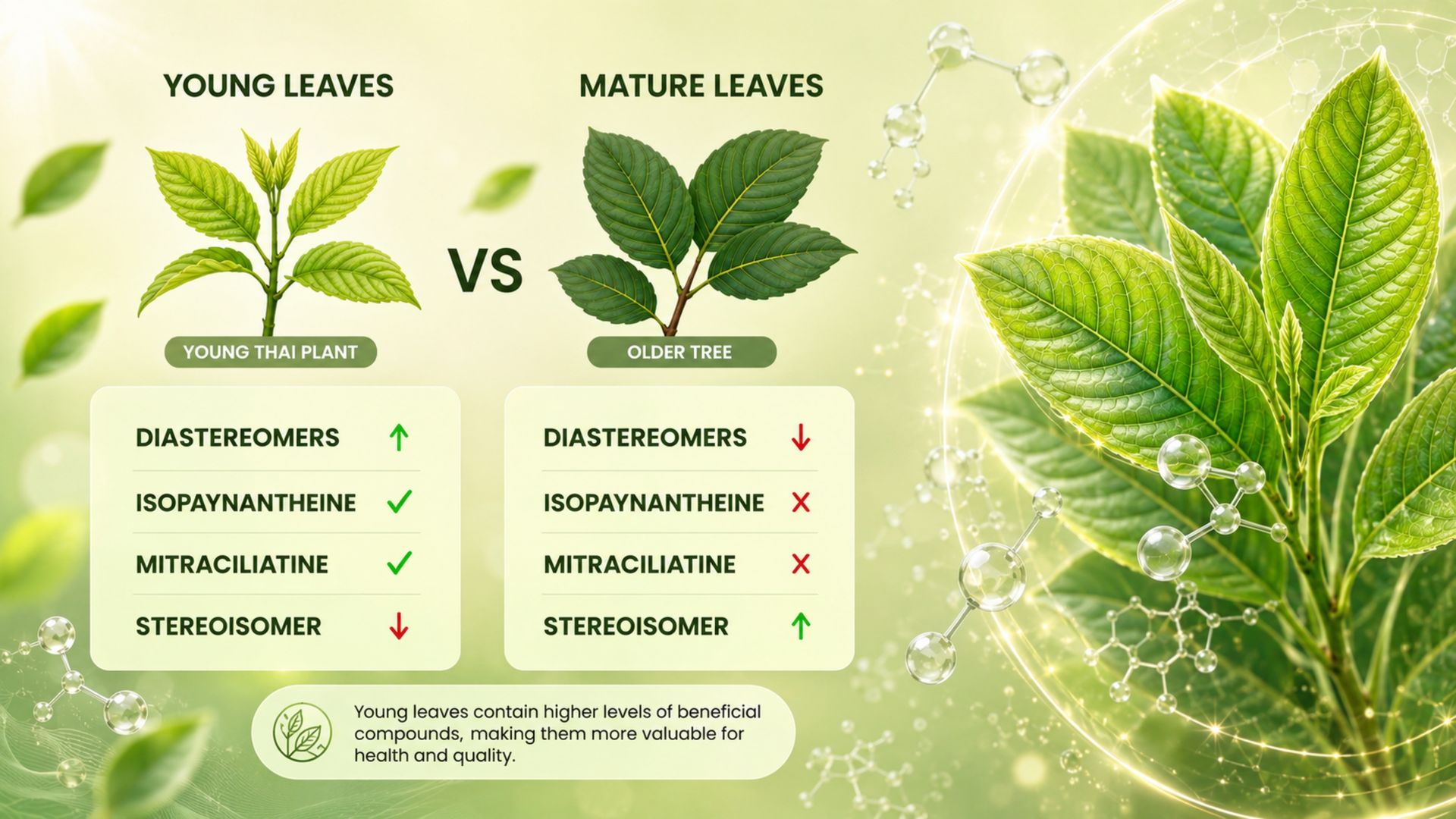
The alkaloid profile of a kratom leaf is not static; it evolves dramatically as the leaf matures. Mitragynine, the primary alkaloid of interest, exists alongside several diastereomers; molecules with the same atomic connectivity but different three-dimensional arrangements, including speciogynine, speciociliatine, and mitraciliatine. 2, 3 These structurally similar compounds can exhibit markedly different pharmacological behaviors, making their presence and ratio in an extract a critical quality parameter.
Research demonstrates that the alkaloidal pattern differs between young and mature leaves, with younger Thai plants containing additional diastereomers such as mitraciliatine and isopaynantheine that are not always present in older trees.4 More importantly, the relative proportions of mitragynine and its diastereomers are known to vary significantly between young and old leaves, even from the same location.2 Young leaves tend to present a more favorable diastereomer ratio, with fewer problematic stereoisomers that could introduce unwanted pharmacological variability.
Isotopologue feeding experiments have further identified young leaves and stems as the primary sites for alkaloid biosynthesis, underscoring their central role in determining final extract composition. For extractors targeting specific alkaloid profiles, this means harvesting at the right stage of leaf maturity is not a minor detail. t is a foundational sourcing strategy.
The Vertical Integration Imperative: Why Farm-to-Extractor Control Matters
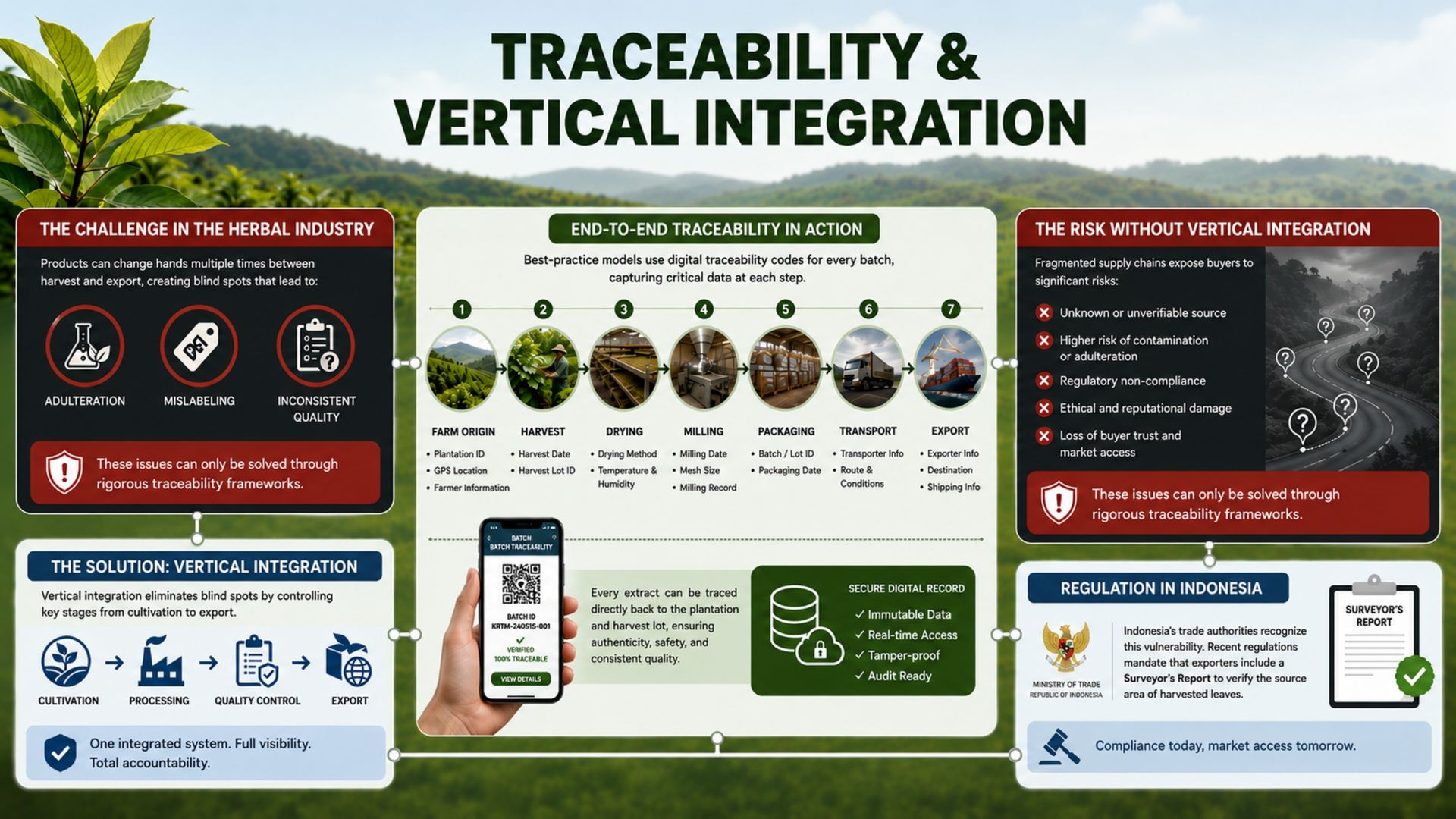
In an industry where a product can change hands multiple times between harvest and export, traceability is both the greatest challenge and the most powerful tool for quality assurance. The herbal products sector globally has been plagued by adulteration, mislabeling, and inconsistent quality; problems that can only be solved through rigorous traceability frameworks.5
Vertical integration eliminates the blind spots that plague fragmented supply chains. Best-practice models now employ digital traceability codes assigned to every batch of raw material, recording farm origin, harvest dates, drying conditions, milling records, and transport chain data. This end-to-end documentation guarantees that every extract can be traced directly back to the plantation and harvest lot. 6
Without vertical integration, buyers face significant risks. Indonesia's own trade authorities have recognized this vulnerability, with recent regulations mandating that exporters include a Surveyor's Report to verify the source area of harvested leaves.7 As industry observers note, until the kratom sector fully embraces vertical integration and standardized extraction methods, it will remain exposed to regulatory and ethical liabilities.
Mitigating Seasonal Drift: Understanding Nature's Variability
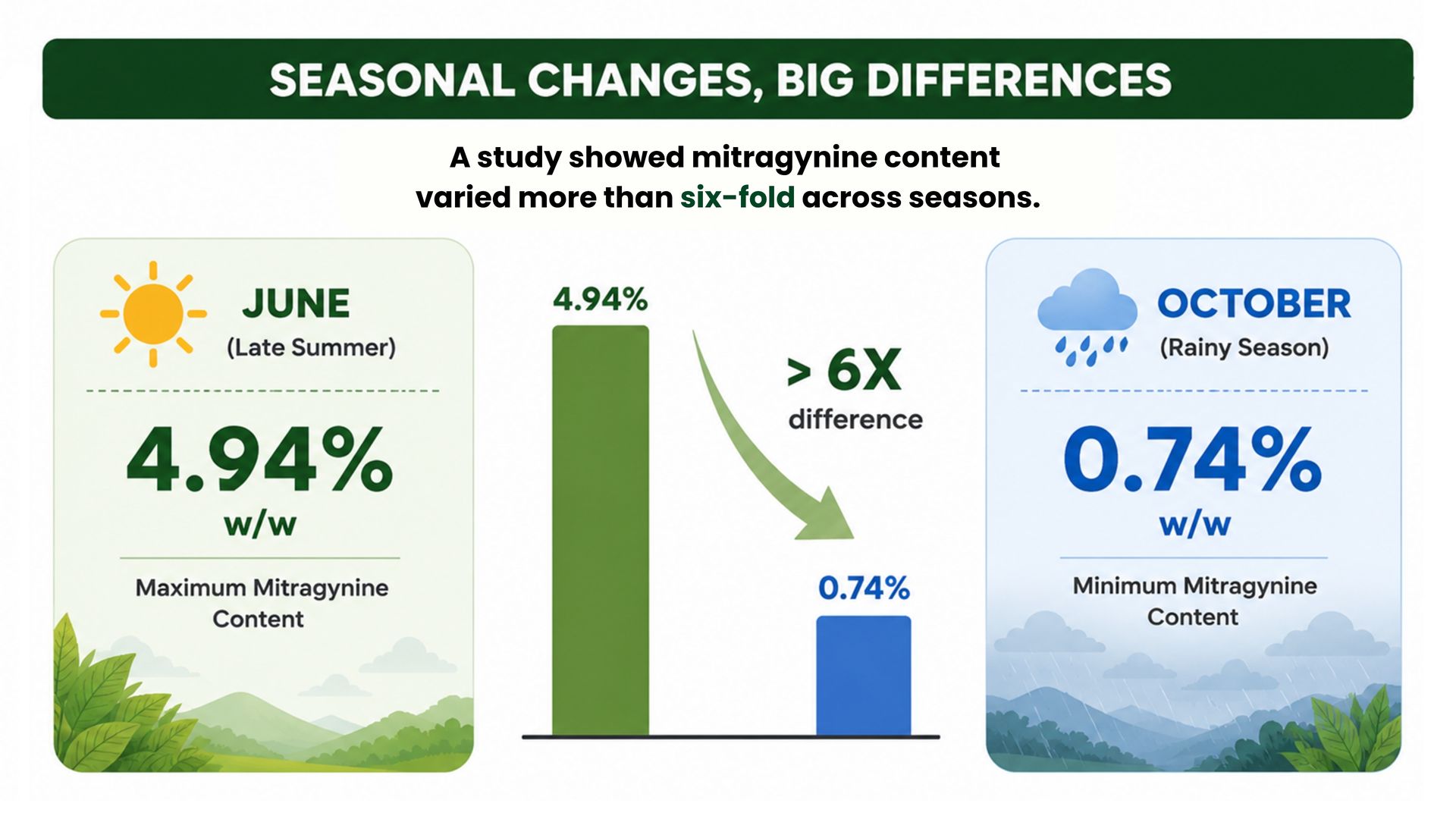
Alkaloid content in kratom is not a fixed value. It fluctuates substantially with the seasons. A comprehensive study of kratom plantation recorded maximum mitragynine content of 4.94% w/w in June (late summer), dropping to just 0.74% w/w in October during the rainy season, a more than six-fold difference driven entirely by seasonal timing.
These findings have been reinforced by recent research demonstrating that kratom alkaloid composition and concentration are substantially influenced by genotype, season, and postharvest handling. Even trace alkaloids like 7-hydroxymitragynine, which commands outsized pharmacological attention, are detected only in specific seasons and vary by cultivar.8
For sourcing professionals, "seasonal drift" represents a critical business risk. A batch purchased in one harvest window may bear little chemical resemblance to the next. Proactive mitigation strategies include multi-harvest blending protocols, real-time alkaloid testing at intake, and cultivation planning that accounts for documented seasonal peaks and troughs. Suppliers operating under Good Agricultural and Collection Practices (GACP) with continuous monitoring of leaf maturity and alkaloid development are best positioned to deliver year-round consistency.6
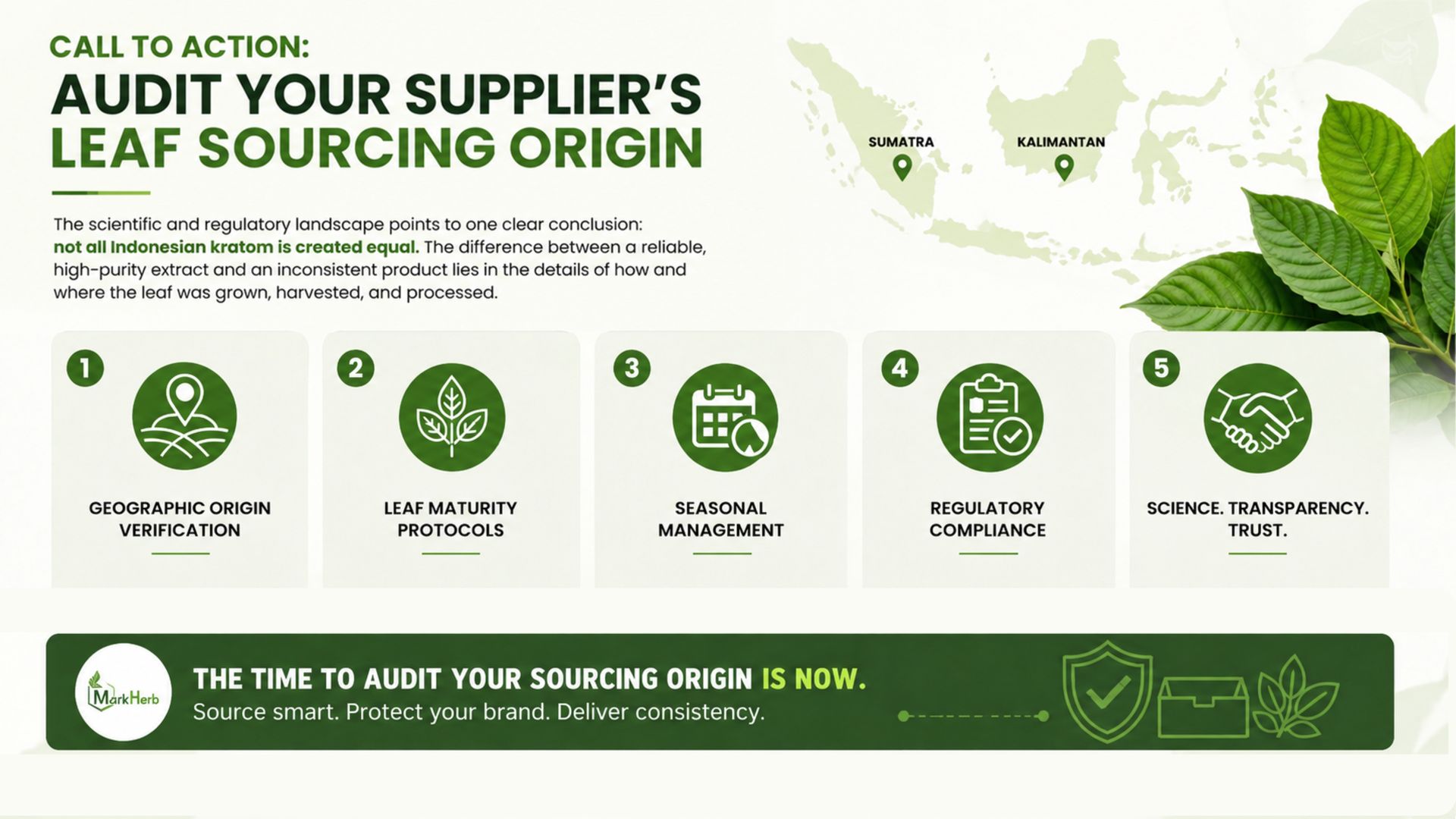
Call to Action: Audit Your Supplier's Leaf Sourcing Origin
The scientific and regulatory landscape points to one clear conclusion: not all Indonesian kratom is created equal. The difference between a reliable, high-purity extract and an inconsistent product lies in the details of how and where the leaf was grown, harvested, and processed.
We recommend that every buyer conduct a thorough audit of their supplier's sourcing practices, with particular attention to:
Geographic origin verification: Can the supplier trace each batch to a specific farm or plantation in Sumatra or Kalimantan, or are they sourcing from anonymous aggregators?
Leaf maturity protocols: Does the supplier have documented standards for harvesting leaves at optimal maturity to ensure favorable alkaloid and diastereomer ratios?
Seasonal management: What processes are in place to monitor and compensate for seasonal alkaloid variation?
Regulatory compliance: Is the supplier meeting Indonesia's evolving export requirements, including Surveyor's Reports that verify source areas?
In an increasingly competitive and scrutinized market, sourcing from Indonesia offers unparalleled advantages, but only when geographic purity is backed by scientific discipline and supply chain transparency. The time to audit your sourcing origin is now.
References
Socfindo Conservation. (n.d.). Mitragyna speciosa. Socfindo Conservation Database. Retrieved May 20, 2026, from https://www.socfindoconservation.co.id/plant/569?lang=en
Sharma A, Kamble SH, León F, et al. (2023). Kratom Alkaloids: Interactions With Enzymes, Receptors, and Cellular Barriers. Frontiers in Pharmacology, 14:1144471. doi: https://doi.org/10.3389/fphar.2023.1144471
Veltri C, Grundmann O. (2022). Current Perspectives on the Impact of Kratom Use. Substance Abuse and Rehabilitation, 13:23–31. doi: https://doi.org/10.2147/SAR.S164261
Botanix Industries. (n.d.). From Farm to Pharma: Ensuring Traceability in Herbal Extracts. Retrieved May 20, 2026, from https://botanixindustries.com/from-farm-to-pharma-ensuring-traceability-in-herbal-extracts/
Raffa RB. (2014). Detection of Mitragynine and Analogs. In: Kratom and Other Mitragynines: The Chemistry and Pharmacology of Opioids from a Non-Opium Source. CRC Press. doi: https://doi.org/10.1201/b17666-15
Paccan Group. (n.d.). Medical Kratom. Retrieved May 20, 2026, from https://www.paccangroup.com/medical-kratom
Tempo English. (2024). Indonesia Implements Regulations for Kratom Export Trade. Retrieved May 20, 2026, from https://en.tempo.co/read/1914245/indonesia-implements-regulations-for-kratom-export-trade
Matsumoto K, Singh D, Müller CP, et al. (2024). Kratom Research and Its Scientific Advances. Neuroscience and Biobehavioral Reviews, 164:105758. doi: https://doi.org/10.1016/j.neubiorev.2024.105758
Discover premium natural material testing services, certified marker standards and high quality Mitragynine products with MarkHerb MERC to elevate your research innovation and herbal product excellence.